

Sponsored by

Agora Arts
Agora Arts is a contemporary fine craft gallery located in the heart of beautiful downtown Decorah, Iowa. Agora has been connecting art and artists to the people of the Driftless since 1992, carrying the work of 200+ talented American artists – including lovely art, jewelry, pottery, prints, sculpture, and more. A brainchild of Decorah native and Luther College grad, Gail Bolson-Magnuson, Agora is most definitely a must-stop spot on any visit to Decorah.
Sponsored by

Your Business!
Oh hey, lookie there – you’re looking here! Can you imagine how many people will look at YOUR business in this spot as well?! Let us write a super-fun business blurb for you, upload it and your logo, and watch the hits come in! Plus, you get to support positive news and community-building in the Driftless! Win + Win! Please reach out for more web sponsorship info – we’d love to make it happen!
A Soggy Serenade
Sponsored by
Agora Arts
Agora Arts is a contemporary fine craft gallery located in the heart of beautiful downtown Decorah, Iowa. Agora has been connecting art and artists to the people of the Driftless since 1992, carrying the work of 200+ talented American artists – including lovely art, jewelry, pottery, prints, sculpture, and more. A brainchild of Decorah native and Luther College grad, Gail Bolson-Magnuson, Agora is most definitely a must-stop spot on any visit to Decorah.
Sponsored by
Your Business!
Oh hey, lookie there – you’re looking here! Can you imagine how many people will look at YOUR business in this spot as well?! Let us write a super-fun business blurb for you, upload it and your logo, and watch the hits come in! Plus, you get to support positive news and community-building in the Driftless! Win + Win! Please reach out for more web sponsorship info – we’d love to make it happen!
In mid-March, as longer days herald the onset of spring, an aquatic miracle unfolds. Small ponds, buried for months under ice and snow, begin to thaw. When the water temperature hits 50 degrees, as if on cue, tiny frogs awaken and begin calling vigorously. It is the first scene of a three-act performance that spans months.
Three frog species brimming with bravado – spring peepers, boreal chorus frogs, and wood frogs – are the first to pierce cold spring air with signature vocalizations. The ching-ching-ching of sleighbells signals the presence of pint-sized spring peepers. If you hear what sounds like someone running a finger over the teeth of a pocket comb, boreal chorus frogs have joined the concert. And when the low chuckling starts, perhaps in response to the vernal din, wood frogs have decided to add their two cents.
The web-footed recital has a purpose. Vocalizing males are competing for mates. The noisy commotion attracts female frogs who hop by to assess would be suitors. Think of it as a high decibel dating game with scores of itty-bitty competitors. Males with the loudest vocalizations typically win the romantic frenzy.
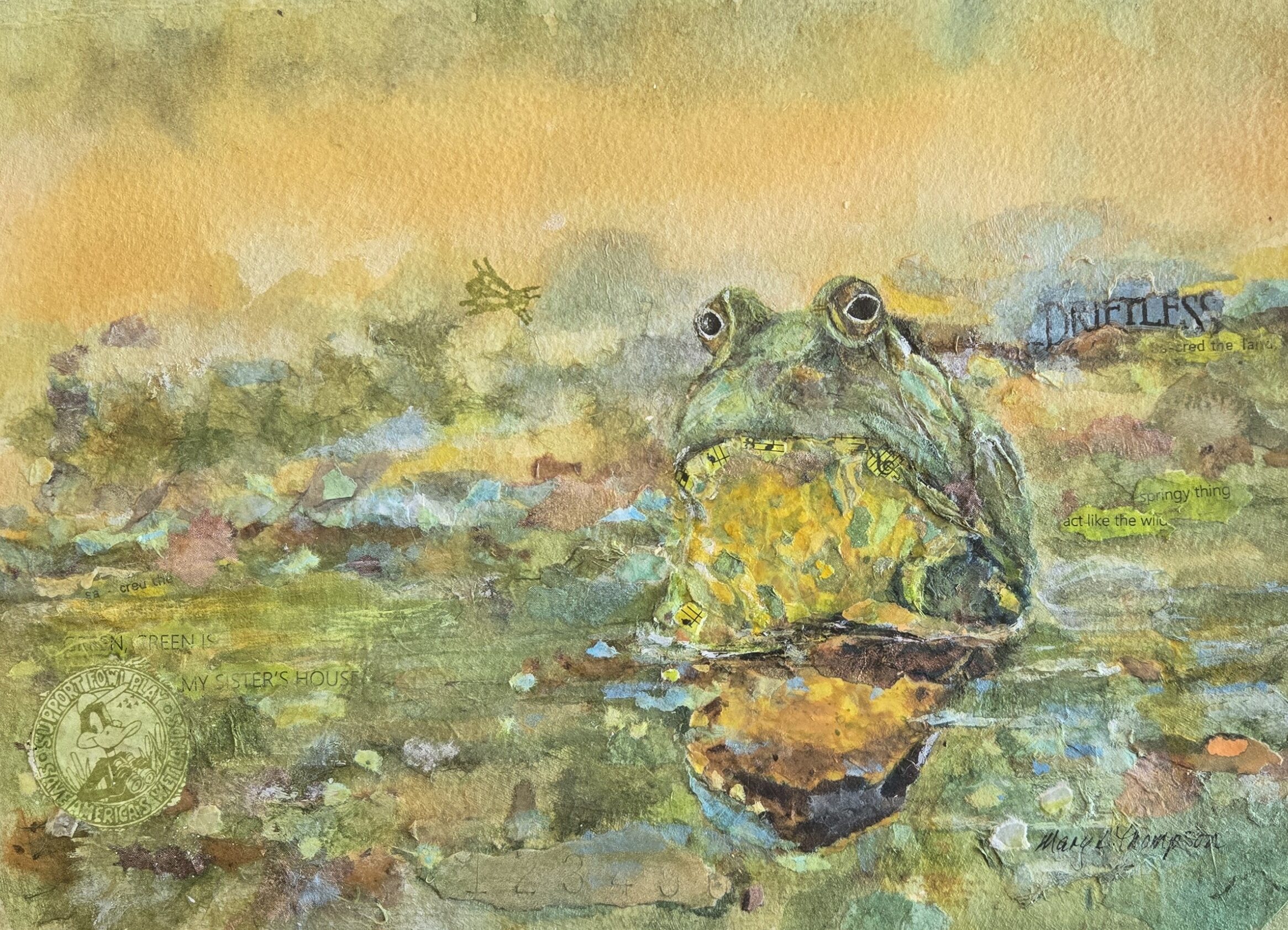
The hormone-fueled performance also attracts predators. As a rule, frogs are food for a variety of birds and mammals. To stay off the menu, they remain partially submerged when calling and go silent at the first hint of danger. If need be, a hasty retreat to the bottom of the pond offers temporary refuge. Eventually, one brave frog will surface, give the “all clear,” and re-ignite the chorus.
After a few weeks, the ponds’ first tenants conclude their froggy nuptials by depositing masses of tiny, gelatinous eggs in the water. Tadpoles emerge from the eggs and ultimately metamorphose into shiny, new frogs, ensuring next year’s presentation.
By May, when the water temperature reaches 60 degrees, a new trio of performers gets down to business. Polka-dotted leopard frogs woo potential mates with a low vocalization that sounds like a wet finger being dragged slowly over an inflated balloon. Eastern gray treefrogs, renowned for their ability to climb vertical surfaces – including tree trunks – due to small suction cups on the tips off their toes, issue bright, staccato trills. Earth bound toads join the party en masse, sometimes traveling up to a mile from woodland hibernacula (their underground winter homes) to reach their favorite pond. Their sweet, prolonged trill drifting through open windows is redolent of early summer nights. Toads are somewhat less cautious than their frog cousins when calling. Large parotid glands behind their eyes can exude bufotoxin, a milky substance that renders them inedible to most predators.
As balmy days push the water temperature to 70 degrees, green frogs and bullfrogs step into the spotlight for the amphibian finale. A calling green frog is reminiscent of a plunked banjo string. The resonant “jug-o-rum” of bullfrogs, on the other hand, conjures images of a cellist tuning up. Together, they create a soundscape that signals arrival of the dog days of summer. Slowly paddling a Mississippi River backwater on a July evening while frogs perform is like having a front row seat in an aquatic amphitheater. It is a sensory experience not to be missed.
Frogs aren’t just charming little crooners. As amphibians, they are highly responsive to changes in water quality and climate and thus serve as important environmental barometers. Protecting Driftless wetlands is essential to their well-being. It is also the best way to ensure their soggy serenade continues to delight future generations.

Mary & Craig Thompson
Mary and Craig Thompson live in the bluffs north of La Crosse. On occasion, they engage in ribbeting discussions about frogs and toads.