

Sponsored by

Your Business!
Oh hey, lookie there – you’re looking here! Can you imagine how many people will look at YOUR business in this spot as well?! Let us write a super-fun business blurb for you, upload it and your logo, and watch the hits come in! Plus, you get to support positive news and community-building in the Driftless! Win + Win! Please reach out for more web sponsorship info – we’d love to make it happen!
Sponsored by

Agora Arts
Agora Arts is a contemporary fine craft gallery located in the heart of beautiful downtown Decorah, Iowa. Agora has been connecting art and artists to the people of the Driftless since 1992, carrying the work of 200+ talented American artists – including lovely art, jewelry, pottery, prints, sculpture, and more. A brainchild of Decorah native and Luther College grad, Gail Bolson-Magnuson, Agora is most definitely a must-stop spot on any visit to Decorah.
South Bear School: Local Legacy
Sponsored by
Agora Arts
Agora Arts is a contemporary fine craft gallery located in the heart of beautiful downtown Decorah, Iowa. Agora has been connecting art and artists to the people of the Driftless since 1992, carrying the work of 200+ talented American artists – including lovely art, jewelry, pottery, prints, sculpture, and more. A brainchild of Decorah native and Luther College grad, Gail Bolson-Magnuson, Agora is most definitely a must-stop spot on any visit to Decorah.
Sponsored by
Your Business!
Oh hey, lookie there – you’re looking here! Can you imagine how many people will look at YOUR business in this spot as well?! Let us write a super-fun business blurb for you, upload it and your logo, and watch the hits come in! Plus, you get to support positive news and community-building in the Driftless! Win + Win! Please reach out for more web sponsorship info – we’d love to make it happen!
Rural Iowa has much more to offer than endless corn fields and gravel roads. Near Decorah, an unexpectedly vibrant source of creation and community lives at the convergence of creeks and pine forests: South Bear School.
The art school’s idyllic property features a small cottage, two barns, and a monumental 65-room main building, which originally hosted a senior living and nursing home community from 1915 to the early 1960s. Over the last six decades, it has become a new sort of “home,” one that has hosted hundreds of creatives, artists, and wanderers.
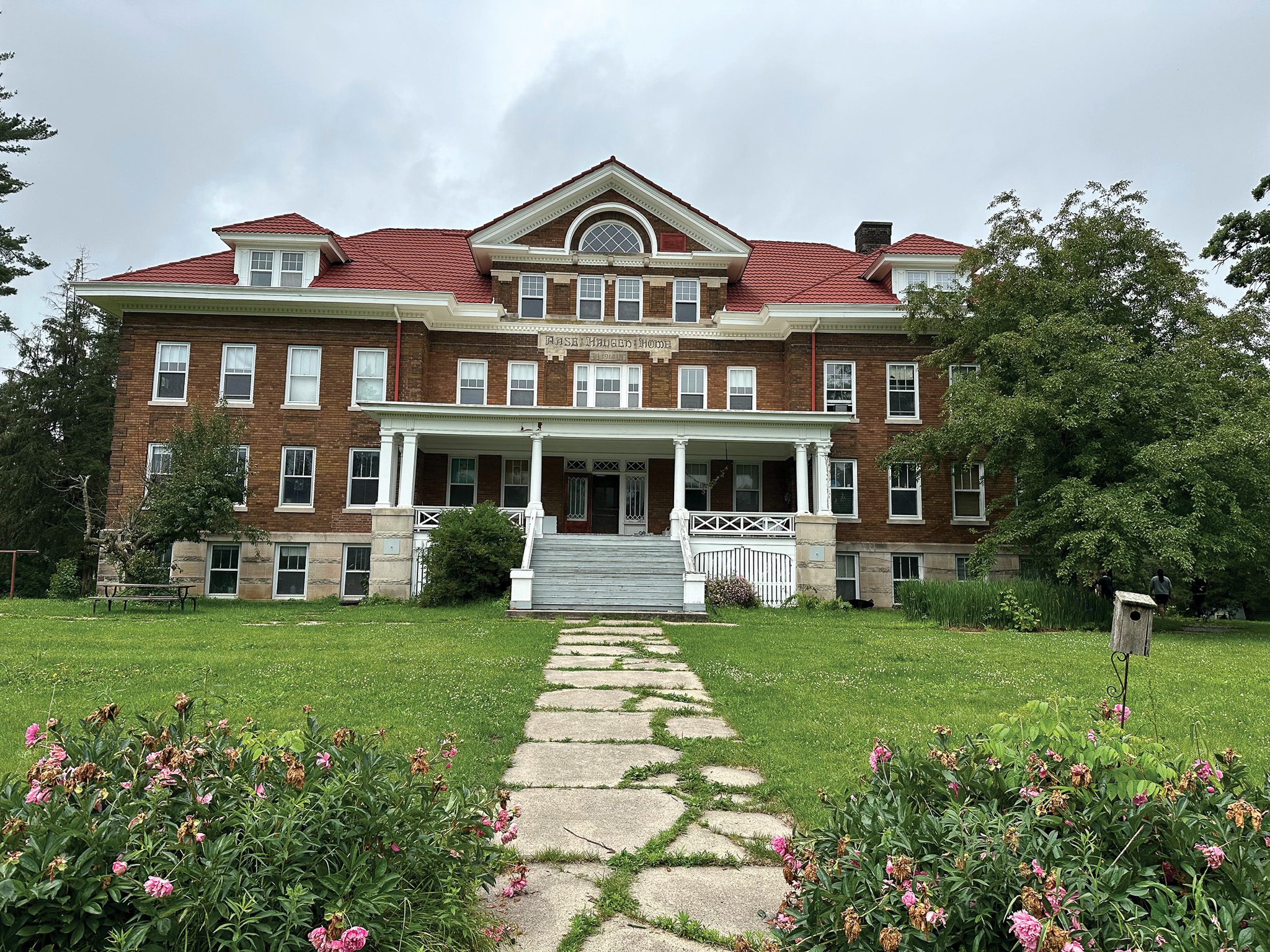
South Bear School, founded in 1970 by Decorah residents Dean and Geraldine Schwarz, alongside their friend Doug Eckhart, has undergone countless changes over time, including a nearly 40-year hiatus from hosting their hallmark summer workshops. What hasn’t changed, however, is the Schwarz family’s commitment to maintaining a community of like-minded folks who champion rural arts and authentic craftsmanship.
Revitalized in 2020 by Dean’s children and grandchildren, South Bear School is once again a lively hub for learning and development. Hosting two weeks of rustic pottery courses each summer, as well as periodic weekend workshops, meditation retreats, music festivals, and other events, this magical place is well on its way to re-asserting itself as a vital center-point in Decorah’s creative culture.
“My siblings and I were incredibly lucky to have been raised in an artistic fashion,” says Maggie Schwarz, Dean’s granddaughter and South Bear’s current Executive Director. “It’s always been a goal of mine to make that kind of community and experience available to other people.”
The Birth of South Bear School
The depth of South Bear’s historical tradition can be traced to 20th century Germany, where Marguerite Wildenhain, the first woman to be designated as a master potter, studied ceramics under the prominent Bauhaus school. After being forced to flee Germany during World War II, Wildenhain immigrated to northern California and started the Pond Farm artists’ colony, where she ran a rigorous and disciplined summer pottery workshop that helped kickstart a studio pottery movement across America.
Born in Cedar Rapids, Iowa, Dean Schwarz studied ceramics at Iowa State Teachers College, then served in the US Navy, before spending three summers at Pond Farm as Marguerite’s apprentice and teaching assistant. Dean and Gerry settled in Northeast Iowa in the mid-1960s, where Dean taught at Luther College. By 1970, the Schwarzes and fellow Luther art professor Doug Eckhart decided it was high time to bring Pond Farm’s Bauhaus model of apprenticeship and artistic community-building to the Midwest.
Before South Bear found its current home, it was situated 20 miles away, in Highlandville, Iowa, a tiny town of less than 30 people. Dean and Gerry had purchased an abandoned hospital house and got to work converting its 14-rooms into dormitories for students and instructors. The adjacent barn was turned into a studio for pottery, one of the core artistic disciplines upon which South Bear School, named for the small creek running through Highlandville, was built.
Throughout those first few summers, students traveled from near and far to experience the collaborative environment of a traditional folk-art community. Though centered around pottery, painting, and poetry, the subjects taught at South Bear varied widely, and students were encouraged to explore various modes of thought and multi-disciplinary methods of creation.
After six wonderful and fruitful years in Highlandville, it was time to expand. In 1976, South Bear moved into the then-vacated, historic Aase Haugen campus located in a rural spot five miles southwest of Decorah. This new space offered endless opportunities for expansion, including the addition of classes in areas such as Women’s Studies, Stone Carving, Philosophy, and more, all taught by artists and professors from across the region. For the next several years, South Bear School supported a community of more than 100 artists and students during its nine-week programs each summer.
The Family Years
Though South Bear School summer programming ended in 1984, the connected, passionate spirit brought by the various cohorts of artists never left the property. When Maggie was born in 1999, there were four generations living in the historic main house, still carrying on the South Bear tradition of living and learning in community. By then, Dean had retired from Luther and was a full-time studio potter, working out of the basement studio in the winters and the chicken-barn-turned-studio in the summers.
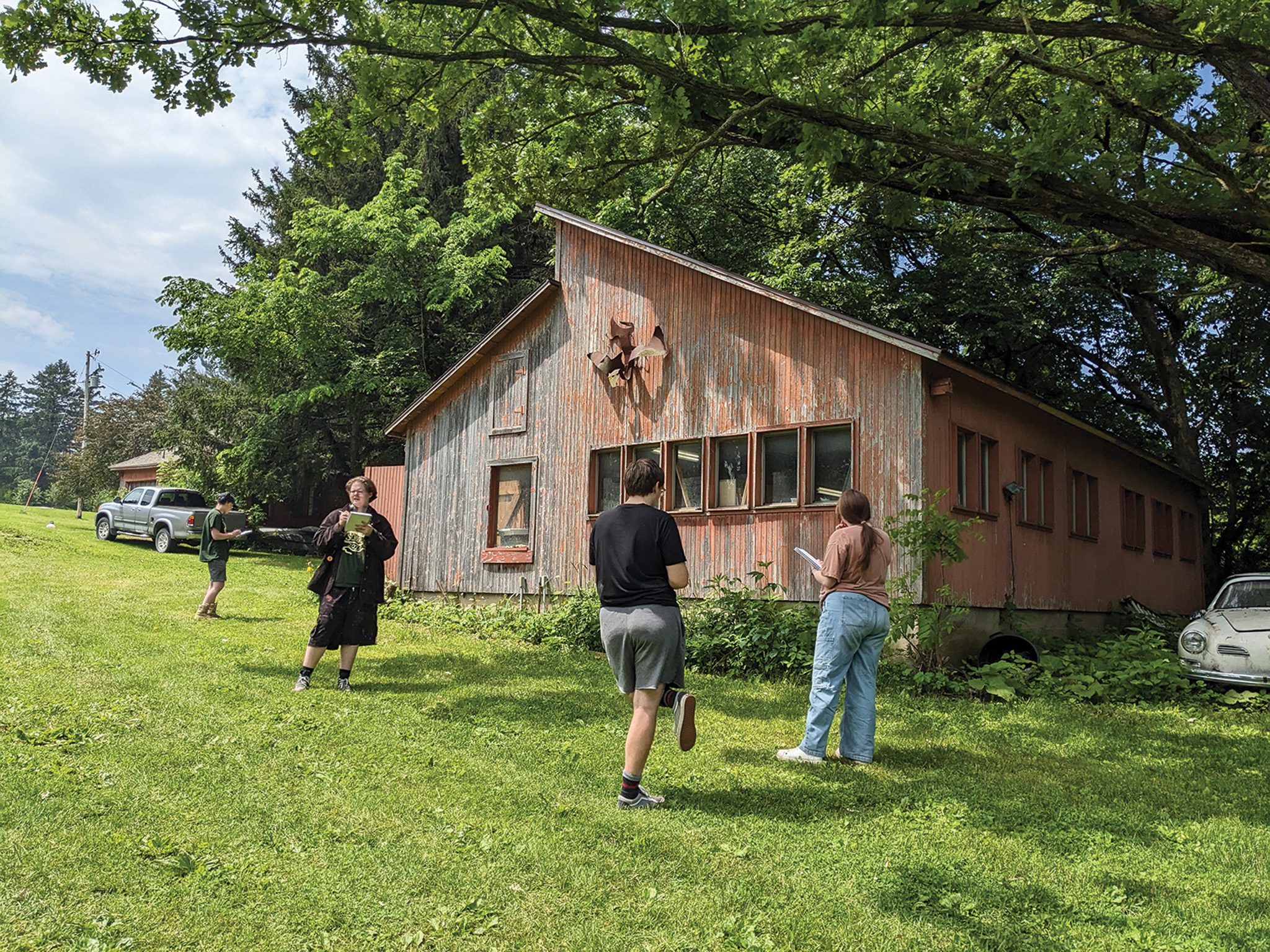
“I didn’t realize how uncommon our upbringing was,” says Maggie. “We essentially lived in a museum, and our grandma hosted Sunday lunches every week for family, friends, and visiting artists. Experiencing this depth of artistic discussion as a child was deeply influential and made me want to facilitate similar opportunities for others, even if on a smaller scale.”
Around 2019, Maggie, and her siblings, Will and Sophie, as well as their father, Lane, began thinking about bringing some of the fondly remembered workshops back to life. After a couple years of reaching out to past students and building a social media presence and new base of interested students, the first official South Bear School pottery workshop under new tutelage was held in 2021.
“So far, a lot of our advertising has been through word of mouth, passed down from folks who have some connection to South Bear’s past, whether it be as a student themselves, or someone who had relatives and parents that studied with Dean,” says Maggie. “We’re excited to start welcoming new audiences, such as college students and those who might be unfamiliar with the world of pottery, and building a multi-generational community of folks that come from diverse backgrounds and experiences.”
Summer Pottery Workshops
Currently, the summer pottery workshops are held for two consecutive weeks each year. While these workshops are heavily informed by and modeled after the original nine-week South Bear School programs, they are also designed to be accessible for all who are interested in learning more about the history of pottery and the joy of independent craftsmanship. Students are encouraged to pick the length of time that works best for them, whether that be the full two weeks, one week, or the weekend workshop.
New for Summer 2026 is the option to purchase single-day passes, perfect for those who are interested in experiencing South Bear’s atmosphere and trying out a kickwheel without committing to a full workshop.
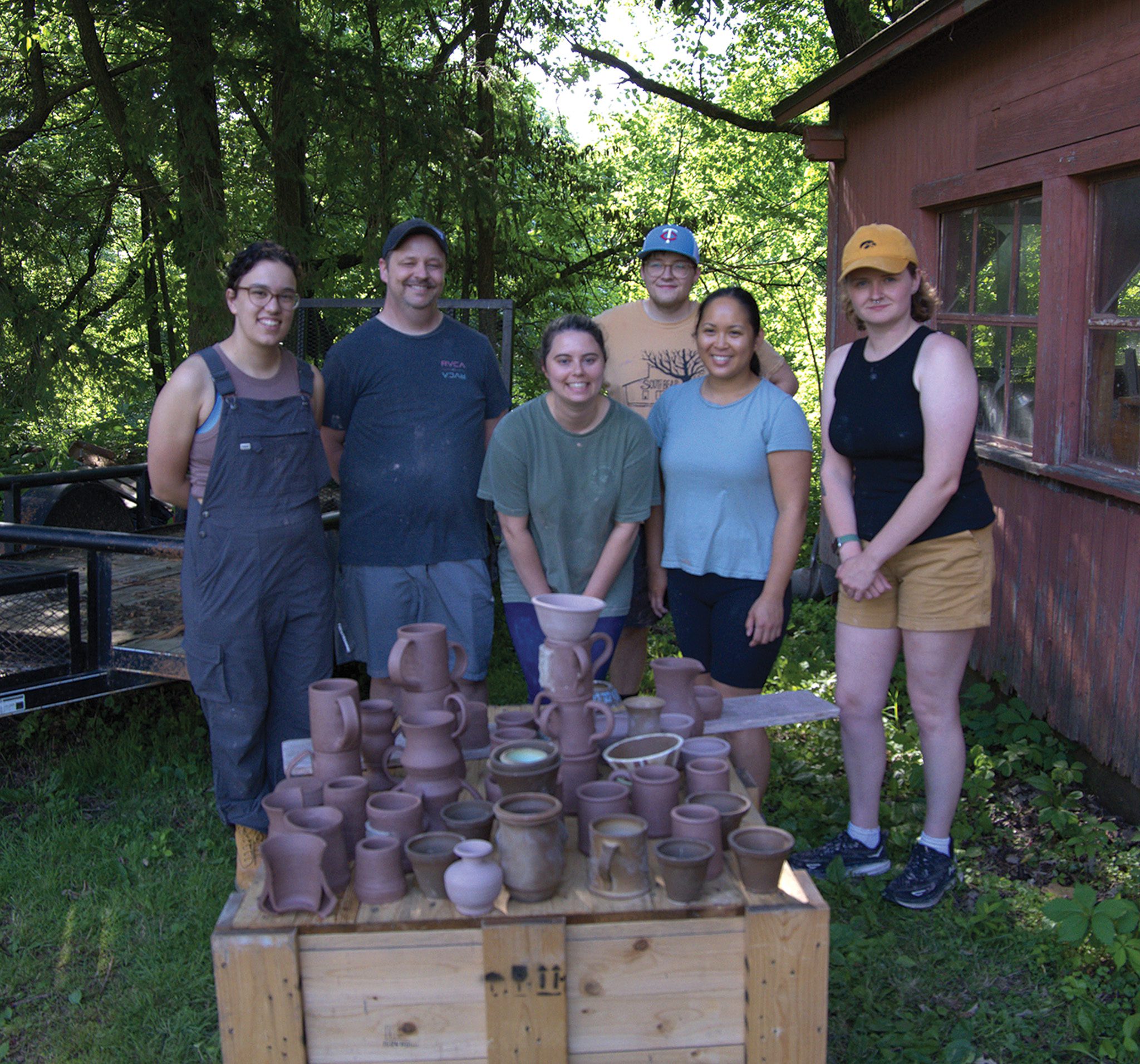
“We try to offer a variety of options, so everyone is able to join us in the act of creating, despite busy work and family schedules,” adds Maggie. “And with all of our instructors being volunteers who have their own separate careers and commitments, two weeks felt like a good place to start.”
Held in the converted chicken barn, just down the hill from the main house, the workshops offer a rustic, authentic, and well-paced approach to pot-making. Rather than using electric pottery wheels like many modern-day teaching studios, South Bear students learn the analog way – on custom, wooden kick wheels based on Marguerite Wildenhain’s original design and handcrafted by the late Orville Running, who was an accomplished local artist and Luther College professor.
Upon entering the Summer Workshop, you are met with a rhythmic thumping sound, a product of the potters kicking the wooden flywheels to power their wheel. Throwing pots on a kickwheel is a very grounding, meditative process, requiring the potter to focus on their breathing and to carefully sync each movement to the rhythm of the wheel.
“Students who have previously worked on electric wheels are often intimidated by the concept of having to spin the wheel yourself,” says Maggie. “We find they end up really enjoying the process – there’s something very special about connecting with that ancient human ability to make beautiful art out of simple, rudimentary materials.”
South Bear summer pottery students follow a 16-form progression, a workshop structure that originated from Germany’s guild system and was brought by Marguerite Wildenhain to Pond Farm in California. Apprentices work alongside Master-level craftsmen, learning first to imitate technique and craftsmanship, before creating their own unique work and designs.
The first form begins with the simple dog dish – which is not actually used for pets, but as a glaze-catcher for larger pots. Each subsequent form introduces a new throwing skill.
The second, the flower pot, teaches potters to throw a pot that gradually gets wider near the top; next comes the bowl, which requires smooth, gradual curves, and that special attention be paid to the pot’s rim. By form six, the potter will produce a pot that is taller than it is wide, and by form 13, they will be combining multiple forms, thrown separately, into one finished pot.
“Each step teaches you how to get to the next one,” explains Maggie. “The forms build upon each other, and over time, you develop the critical eye needed to start creating your own forms and finding ways to express yourself through the clay.”
Celebrating 50 Years of South Bear!
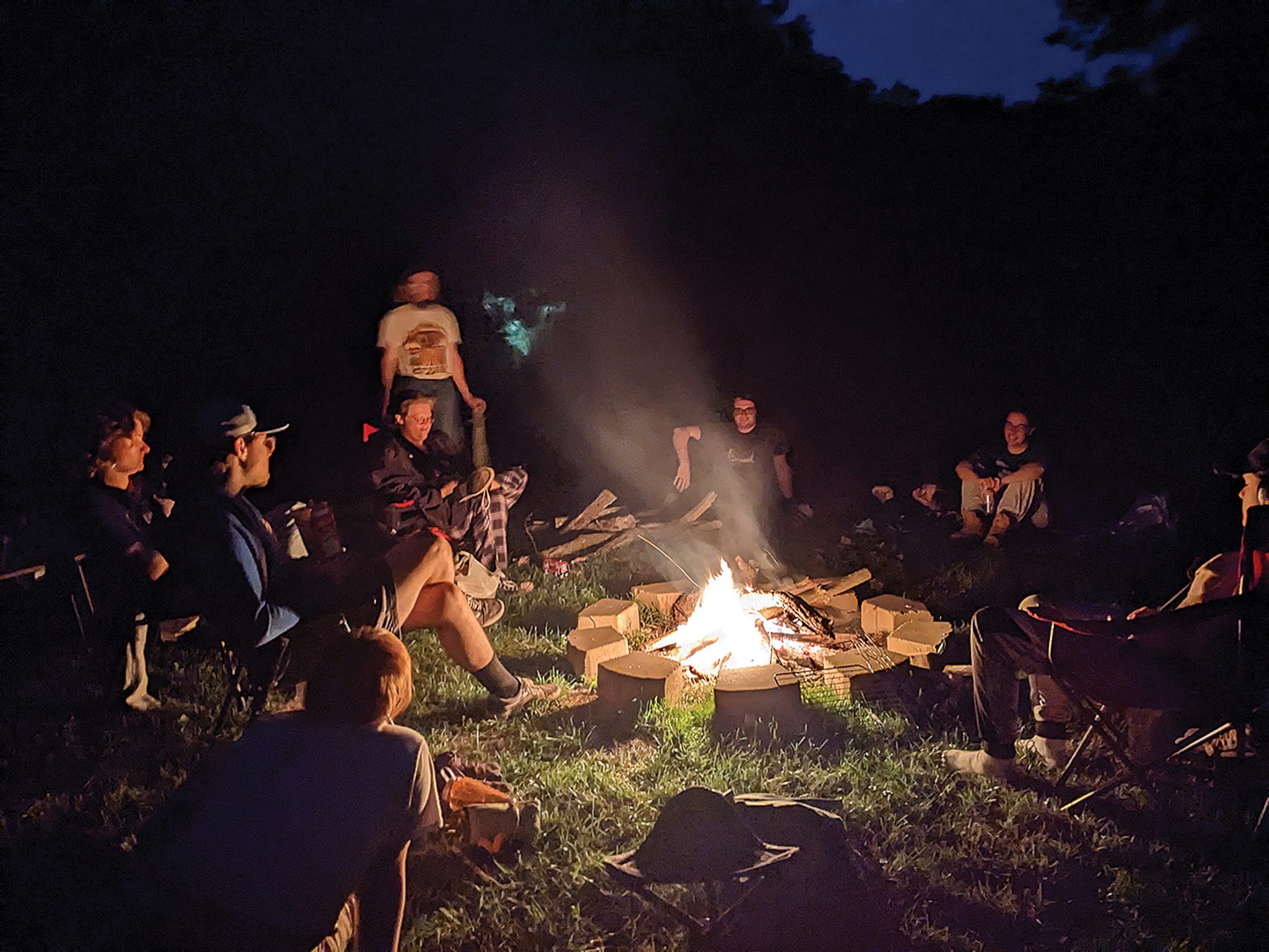
2026 marks 50 years since South Bear School, and the Schwarz family, first came to call the historic Aase Haugen property home. To mark this exciting milestone, the upcoming year is one of jubilant celebration, featuring concerts, workshops, and reunions that honor the legacy of South Bear and highlight what’s to come for this tight-knit community.
Specific events to look forward to include the third iteration of Gays and Faes music festival, a 50th anniversary alumni gathering, and the annual Midsummer’s Eve party.
This year, the Summer Workshop will also see the revival of an integral part of South Bear’s foundation: the option to take shorter courses in a variety of artistic disciplines – such as printmaking, watercolors, and poetry – alongside the typical pottery instruction.
“Providing a learning environment that incorporates and encourages multiple disciplines is something we’re thrilled to begin offering again, as we grow,” says Maggie. “The goal is, and has always been, quite simple: to hold space for the learning and teaching of Bauhaus traditions that have been developed and passed down by humans for over six-hundred years.”
Clara Wodny
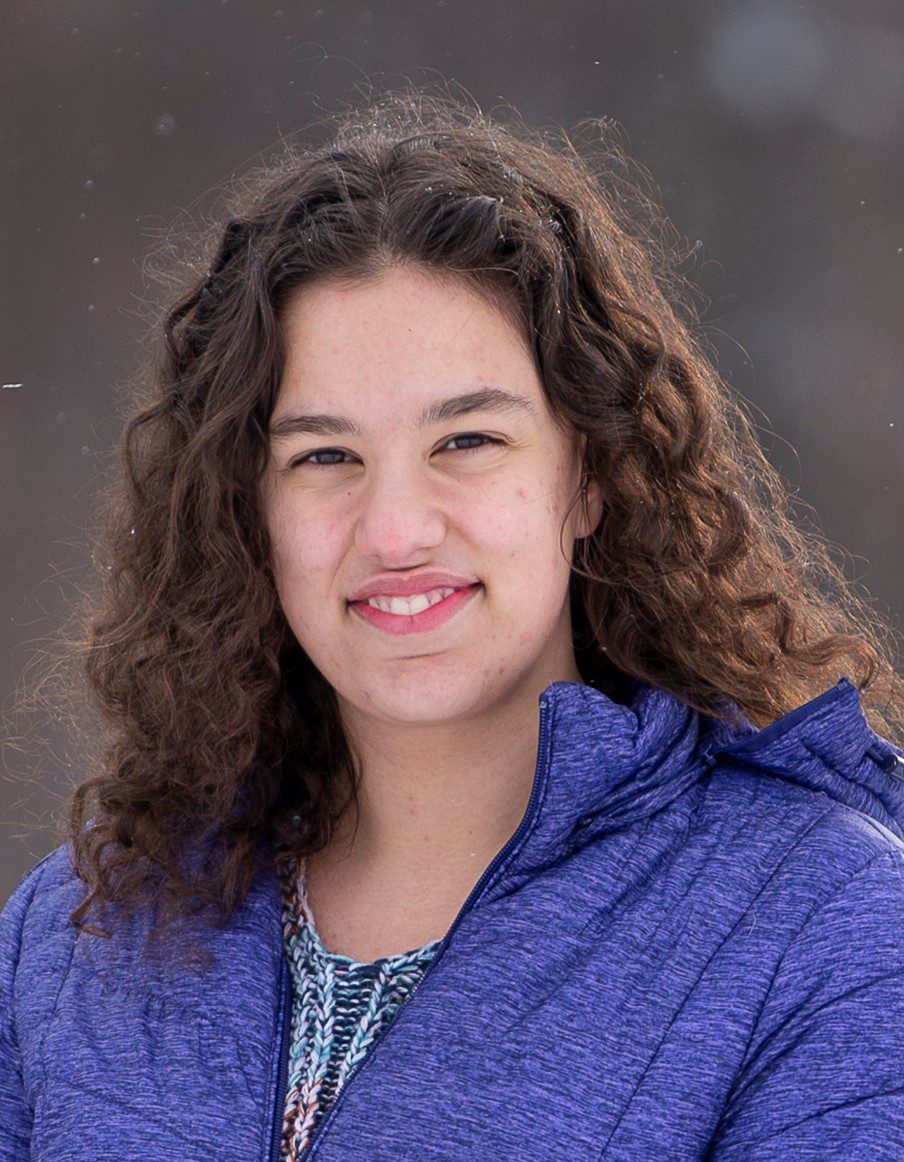
Clara Wodny is a 2025 graduate of Luther College, where she fell in love with the Driftless while studying English and Visual Communications. Currently residing up north in her hometown of Duluth, MN, she works in Aquatics Management at a YMCA and interns with LAMBDA Literary, a nonprofit organization whose mission is to nurture and advocate for LGBTQIA+ Writers.
Visit southbearschool.org for more info or to sign up for the Summer Workshop! Plus, save the date for these 2026 events:
Gays and Faes Music Festival, May 29-31
Summer Pottery Retreat, June 8-19
50th anniversary reunion, June 20-21
Midsummer’s Eve Party, July 18