

Summer Hiking with Kids
It’s summertime and the hiking is easy – even with kids! Each time you take a child outside to hike and explore, you nurture them toward a lifelong love and caring for nature and the outdoors.
With a few preparations – sunscreen, insect repellent, and ability to identify plants to avoid, like poison ivy and nettles – you and the kids in your life can be ready to hit the trails.
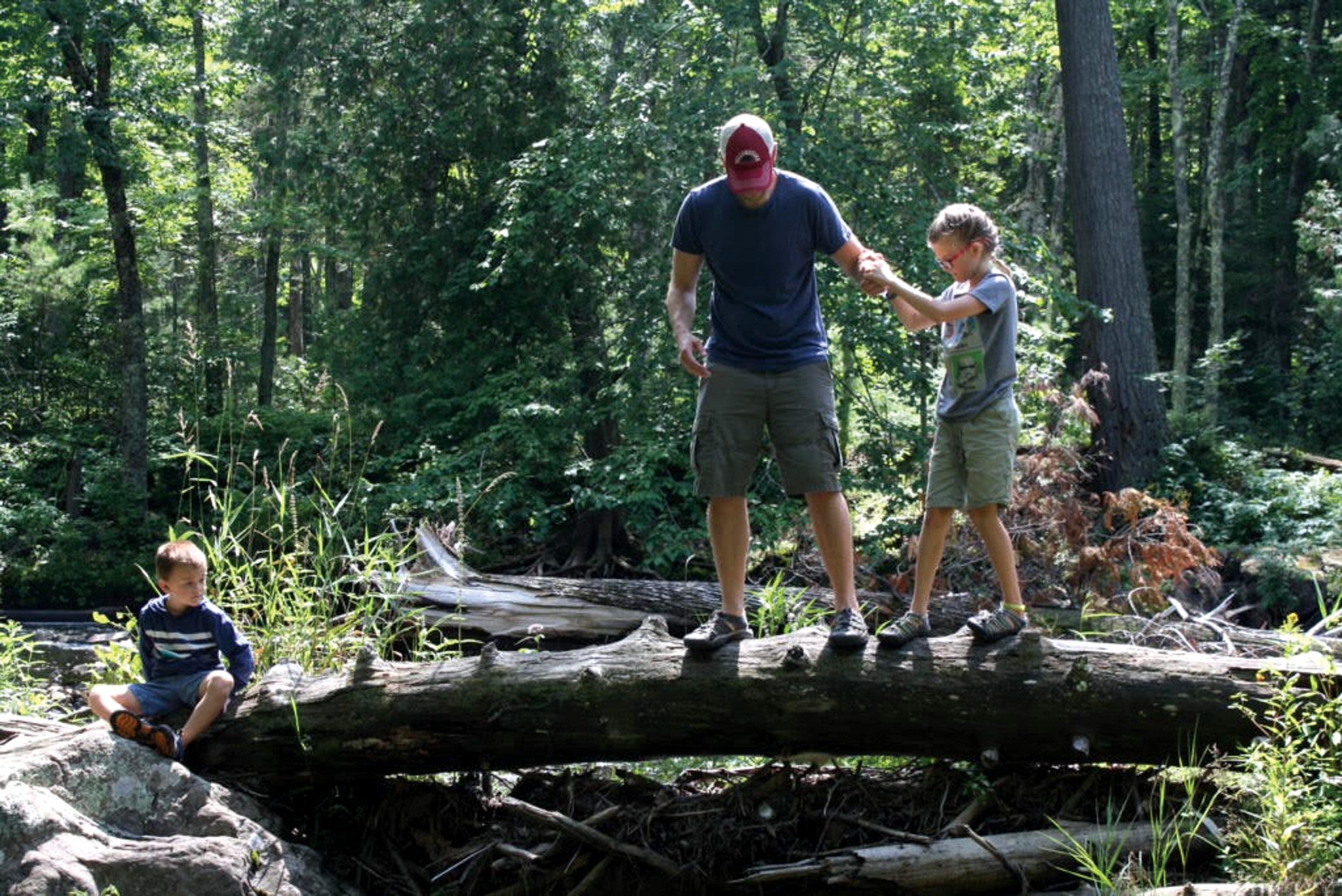
When first introducing children to hiking outdoors, start small, like going for a walk at a nearby park or paved trail. From there, choose “wilder” short trails that get kids out of the neighborhood and into county and state parks and natural areas. Gradually add length to your hiking as the kids adapt and grow in their interest and eagerness to explore the diverse ecosystems of the Driftless.
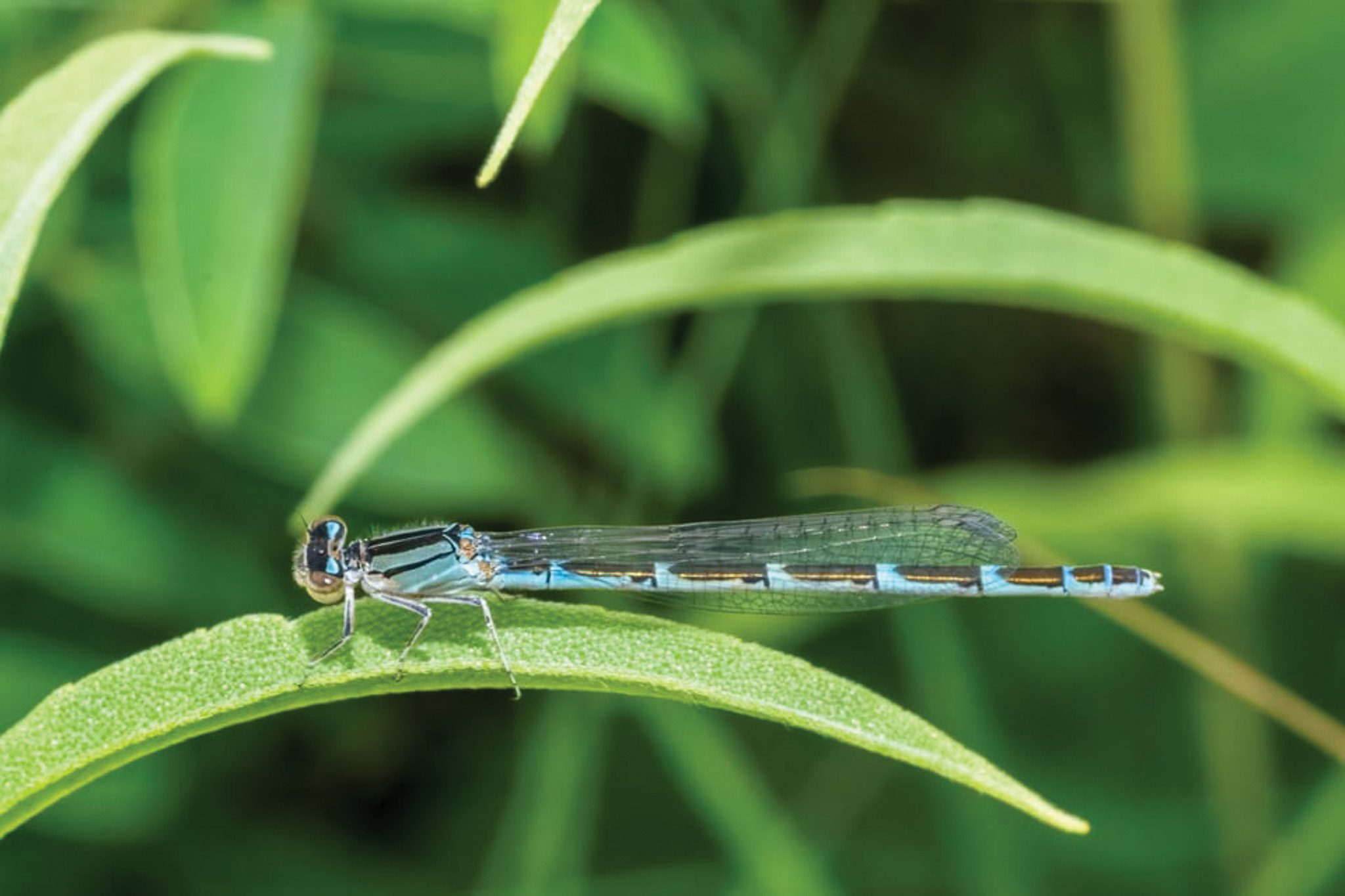
As you walk along, encourage exploration. What do you hear? Bird song? Frog calls? The buzz of insects? The wind? A few moments of listening can open up subtle learning opportunities and conversations as you speculate about nature’s soundtrack.
Ask kids to keep a sharp eye out as you hike as well. Look “large” for unusual tree shapes, bark patterns, rock formations, cloud patterns, cliffs, animals, birds, and other natural phenomena. Look “small” for ground-hugging flowers, nests, rocks, spiderwebs, mushrooms, fungi, leaves, moss, or other miniature objects that hold fascination. Both large and small sights can spark inspiration in little (and big) hikers.
This can be a great opportunity to talk about “leave no trace,” a framework of seven principles that aim to help people reduce their personal footprint on nature (see sidebar for the list). Educate kids about taking everything out that they bring in with them. Bring a small bag for your trash and encourage young hikers to pick up any litter seen along trails. Preserving our natural resources for future children is a great way to instill early conservation knowledge for kids.
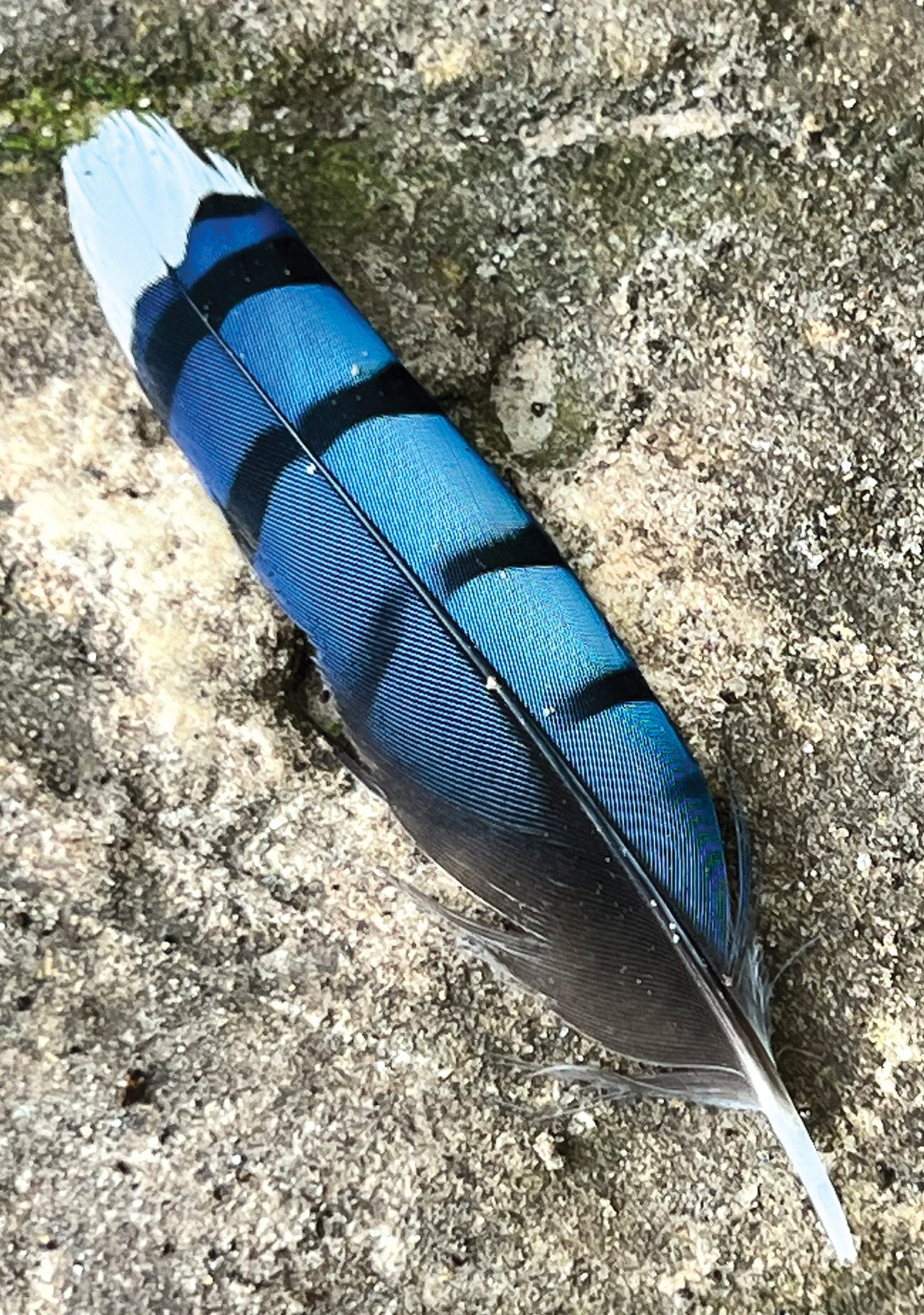
Be aware of rules at parks to help you understand whether it’s ok to pick up and keep a natural object or two along the trail. If yes, let your young hiker keep an object that intrigues them – a fallen leaf or stick, stone, pinecone, acorn, empty eggshell, or chrysalis – to take home as a memory of the hike or as a basis for an art project. While picking flowers is a temptation, take pictures instead to preserve the resource and the memory. Print the pictures out at home and let kids hang them in their room or on the fridge.
Hiking with kids can help even the most experienced hiker see something from a new perspective. Check with nearby nature preserves, wildlife refuges, state parks, and other outdoor organizations for guided hikes and programs that can improve both your and a child’s nature knowledge.
There are also amazing online resources. Phone apps like PictureThis, Merlin Bird ID, Seek, and BeeMachine can boost your identification mojo in the field. Check the June 1, 2026 post on my Hiking the Driftless Trails blog for a great list of websites and resources that can help enrich outdoor adventures for you and the kids in your life.
Some kid-friendly & family-friendly trails:
Norwegian Ridge Nature Trail (MN) – This trail features 1-, 2-, and 3-mile loops on dirt trails through woods, wetlands, near streams and ponds, prairies, and across a troll bridge or two. More than 50 trail signs identify birds and flowers abound. Park to the east of Red’s IGA, 500 E. Main St, Spring Grove, MN
Bluffside Park Wildwood West Trail (MN) – A 2-mile dirt trail at this city park winds along the bluff rim past ferns, city and bluff views, and small prairies. Sharp-eyed hikers who walk the trail counterclockwise may spot a large wood-sprite face high on a tree trunk. End of Wincrest Drive E, Winona, MN GPS: 44.03715, -91.67002

Fish Farm Mounds State Preserve (IA) – Climb stone steps to see conical burial mounds made by indigenous Woodlands people. Then do some out-and-back exploration of some of the unmarked rolling forested trails to the west and north sides of the mound group. 2692 IA-26, New Albin, IA
Trout Run Dug Road/Trollkor’s Trail segment (IA) – Towering algific talus limestone cliffs blow cold air out on this paved trail segment (known also as Dug Road) along the Upper Iowa River. Look for a riverside sculpture and bench on the way to the next trailhead. Intersect Trollkor’s dirt trail up to Phelps Park. Follow the CCC-built stonework to a forested bluffside trail with bridges on this 2.2-mile loop hike. Trailheads at end of Oneota Dr or W. Main St, Decorah, IA
La Crosse River Marsh Trails (WI) – A web of paved and graveled trails run through the marsh. Viewing platforms, bridges, and wide-open trails give glimpses of wetland wildlife. One of the main access points is Myrick Park’s The Nature Place Nature Center, 789 Myrick Park Dr, La Crosse, WI
Halfway Creek Park (WI) – This “urban forest” city park has a crushed rock trail that follows a beautiful creek under highway overpasses and over numerous bridges. While it’s 3 miles one way, go as far as you like before turning back. 300 W. Roberts Street, Holmen, WI
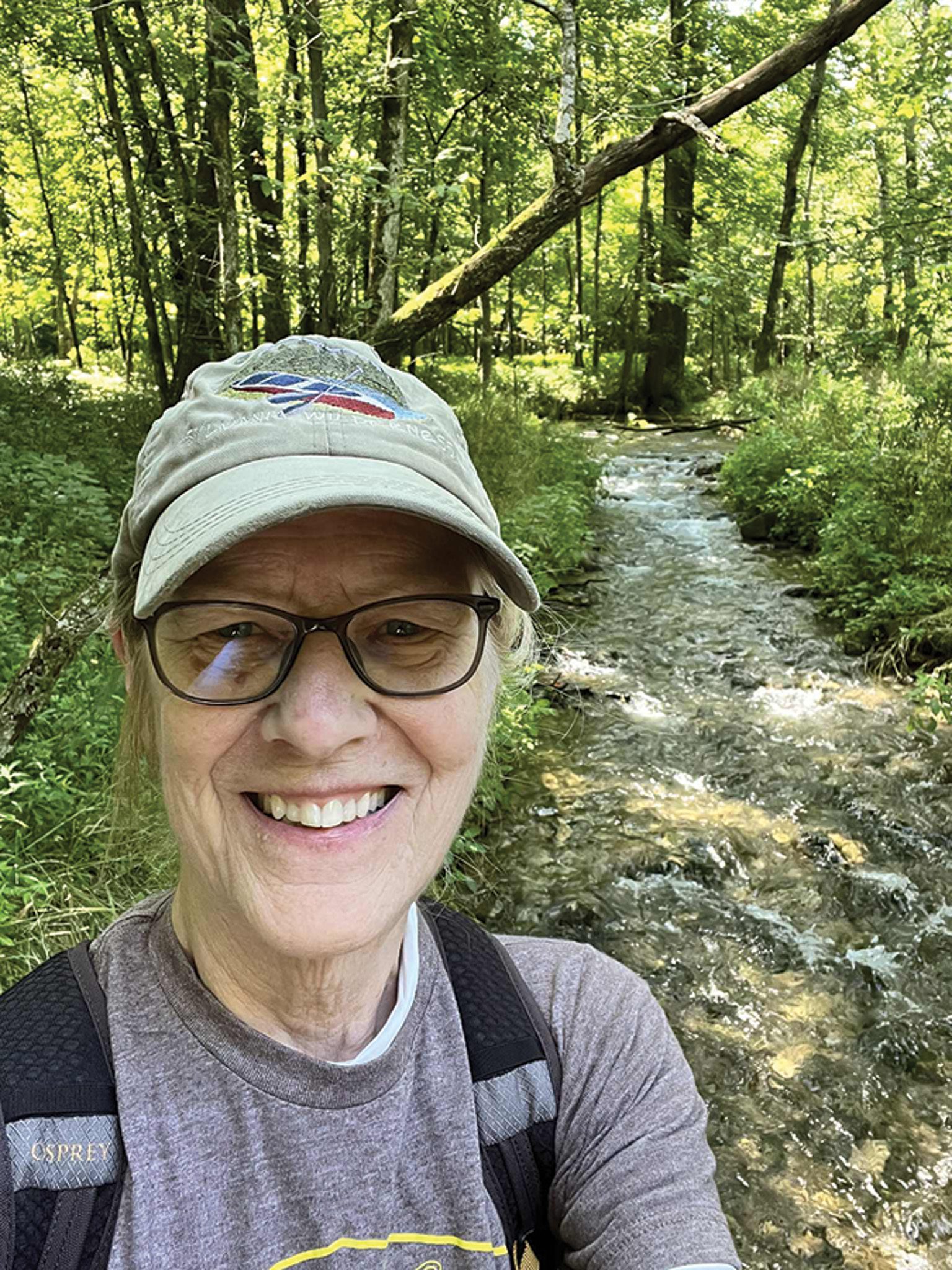
Marge Loch-Wouters
Marge Loch-Wouters is a Minnesota Master Naturalist living in La Crescent MN. Her Hiking the Driftless Trails blog encourages everyone to head out on the trails all year long, no matter your age or physical condition.
7 Principles of Leave No Trace
1. Know Before You Go: Check the weather, bring necessary gear, and plan activities within everyone’s ability.
2. Choose the Right Path: Stay on trails, walk single file, and avoid stepping on plants or flowers. If you’re leaving footprints, the ground is too soft for hiking; turn around and choose a paved path instead.
3. Trash Your Trash: Take all trash out with you, including food scraps and toilet paper.
4. Leave What You Find: Try to take only pictures. Follow the rules in place for the natural area you’re exploring with regards to small, natural keepsakes.
5. Be Careful with Fire: Use camp stoves for cooking, or keep fires small within designated rings.
6. Respect Wildlife: Watch animals from a distance; do not feed them or pick them up.
7. Be Kind to Other Visitors: Keep voices low, let nature’s sounds prevail, and yield to others on the trail.
See lnt.org for more information