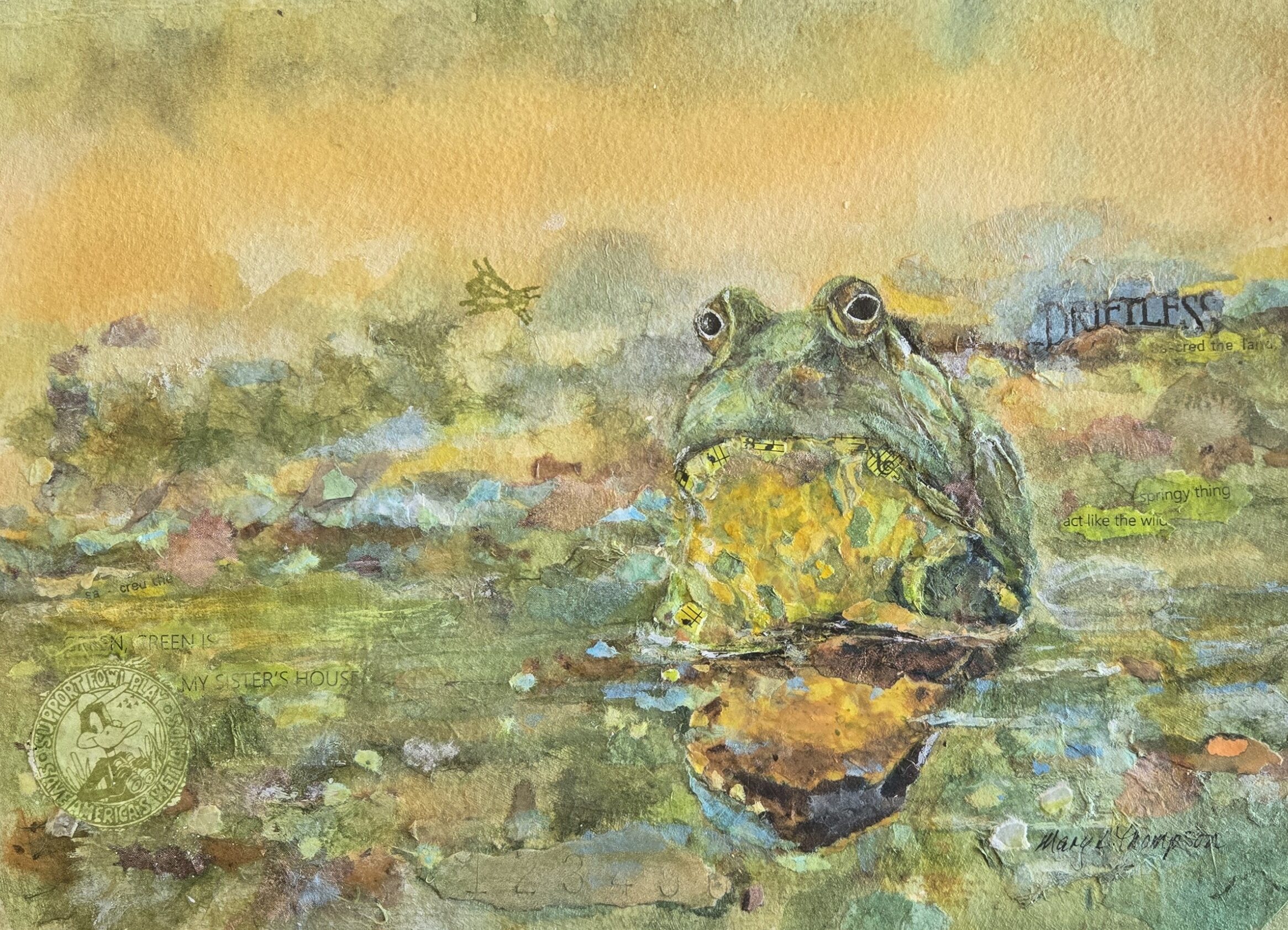
In mid-March, as longer days herald the onset of spring, an aquatic miracle unfolds. Small ponds, buried for months under ice and snow, begin to thaw. When the water temperature hits 50 degrees, as if on cue, tiny frogs awaken and begin calling vigorously. It is the first scene of a three-act performance that spans months.
Three frog species brimming with bravado – spring peepers, boreal chorus frogs, and wood frogs – are the first to pierce cold spring air with signature vocalizations. The ching-ching-ching of sleighbells signals the presence of pint-sized spring peepers. If you hear what sounds like someone running a finger over the teeth of a pocket comb, boreal chorus frogs have joined the concert. And when the low chuckling starts, perhaps in response to the vernal din, wood frogs have decided to add their two cents.
The web-footed recital has a purpose. Vocalizing males are competing for mates. The noisy commotion attracts female frogs who hop by to assess would be suitors. Think of it as a high decibel dating game with scores of itty-bitty competitors. Males with the loudest vocalizations typically win the romantic frenzy.
The hormone-fueled performance also attracts predators. As a rule, frogs are food for a variety of birds and mammals. To stay off the menu, they remain partially submerged when calling and go silent at the first hint of danger. If need be, a hasty retreat to the bottom of the pond offers temporary refuge. Eventually, one brave frog will surface, give the “all clear,” and re-ignite the chorus.
After a few weeks, the ponds’ first tenants conclude their froggy nuptials by depositing masses of tiny, gelatinous eggs in the water. Tadpoles emerge from the eggs and ultimately metamorphose into shiny, new frogs, ensuring next year’s presentation.
By May, when the water temperature reaches 60 degrees, a new trio of performers gets down to business. Polka-dotted leopard frogs woo potential mates with a low vocalization that sounds like a wet finger being dragged slowly over an inflated balloon. Eastern gray treefrogs, renowned for their ability to climb vertical surfaces – including tree trunks – due to small suction cups on the tips off their toes, issue bright, staccato trills. Earth bound toads join the party en masse, sometimes traveling up to a mile from woodland hibernacula (their underground winter homes) to reach their favorite pond. Their sweet, prolonged trill drifting through open windows is redolent of early summer nights. Toads are somewhat less cautious than their frog cousins when calling. Large parotid glands behind their eyes can exude bufotoxin, a milky substance that renders them inedible to most predators.
As balmy days push the water temperature to 70 degrees, green frogs and bullfrogs step into the spotlight for the amphibian finale. A calling green frog is reminiscent of a plunked banjo string. The resonant “jug-o-rum” of bullfrogs, on the other hand, conjures images of a cellist tuning up. Together, they create a soundscape that signals arrival of the dog days of summer. Slowly paddling a Mississippi River backwater on a July evening while frogs perform is like having a front row seat in an aquatic amphitheater. It is a sensory experience not to be missed.
Frogs aren’t just charming little crooners. As amphibians, they are highly responsive to changes in water quality and climate and thus serve as important environmental barometers. Protecting Driftless wetlands is essential to their well-being. It is also the best way to ensure their soggy serenade continues to delight future generations.
When your parents are entrepreneurs, it can often feel more realistic to become an entrepreneur yourself.
From childhood into adulthood, sisters Erica Thilges and Monica Thilges watched their parents create various businesses. Harlan and Joan Thilges, originally from north central Iowa, moved their family to Fairmont, Minnesota, in April of 1980 to open a decorating business. “They moved and opened the business the same weekend our younger brother, Jason was born!” says Erica. “At the time, I was two and a half years old, Monica was one and a half! I can’t imagine!”
Harlan and Joan ran Fairmont Decorating, as well as partnering in a storage unit business, until they retired in 2012 and attempted to adjust to the new norm. “While our mom had loads of hobbies to keep her busy, our dad really missed the social interaction,” says Erica. So Harlan and Joan decided to move to Harmony, Minnesota, in 2015, purchasing an already-existing antique mall, Generations. They rebranded it New Generations and ran it until in 2021, when they retired and Erica took over as co-owner and manager.
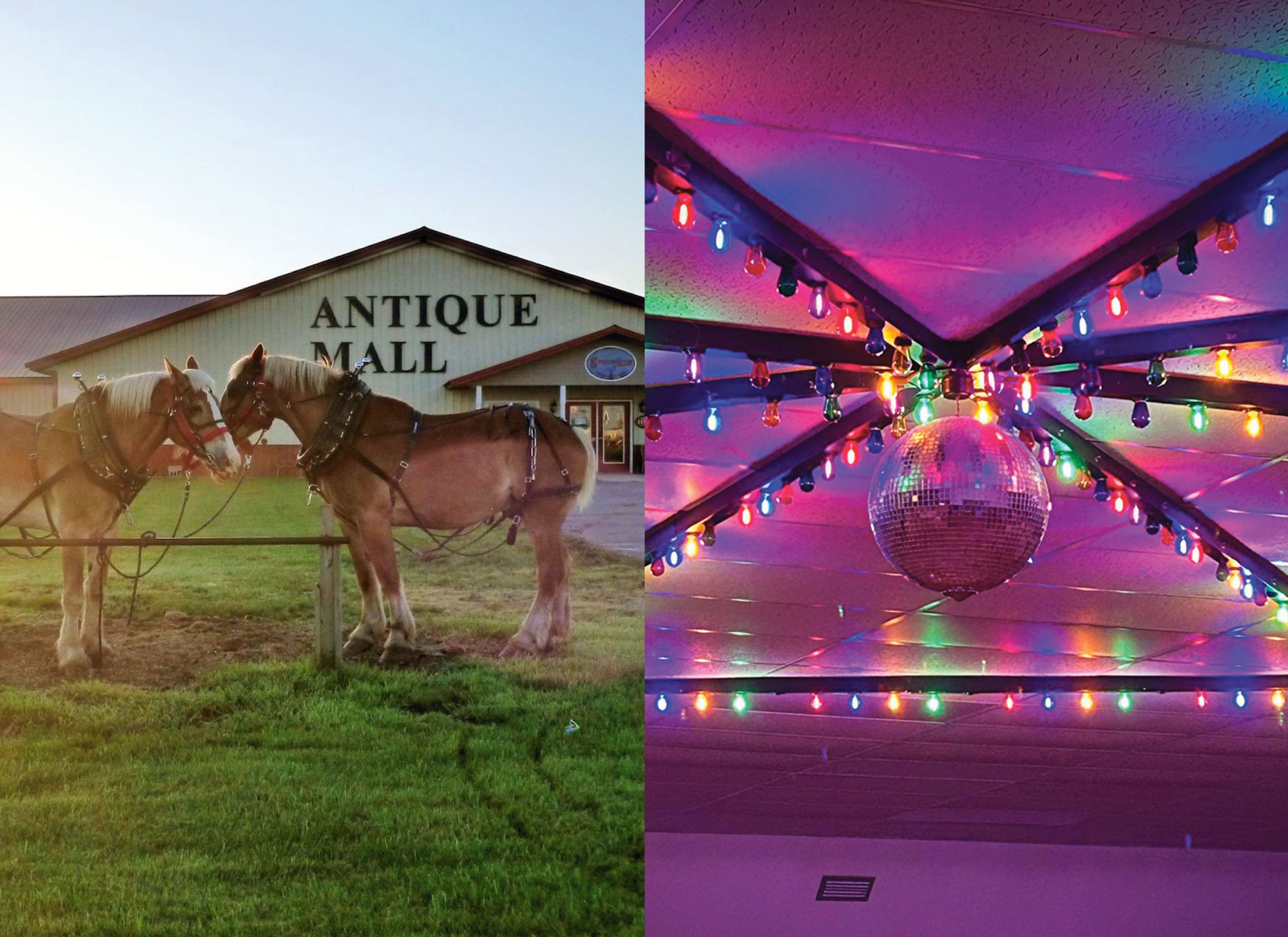
The New Generations of Harmony logo is a fun stop in Harmony, Minnesota. / Photo courtesy New Generations of Harmony
Erica’s path led from Minnesota to Asheville, North Carolina, where she managed a bed and breakfast for more than a decade. After quarantining with Monica’s family in Madison during the pandemic, Erica decided to move to Harmony to learn the antiques and resale business from her parents.
Monica spent most of her early adulthood in Oregon and California. After she got married, they had a couple of kids and decided to move to Madison in 2017 to be closer to family. Then, in 2025, Monica and her family moved to Decorah. “I am really fortunate to be able to work remotely, which made the move to Decorah a lot easier because I was able to stay with the same company,” says Monica. It also made it easier for Erica and Monica to hatch a plan for Stardust Retro Revival, which opened in March of 2025. Monica is the owner, while Erica manages the day-to-day business. “I typically get out to Harmony a couple of times a month – the malls have proven helpful as we settle into our new home!”
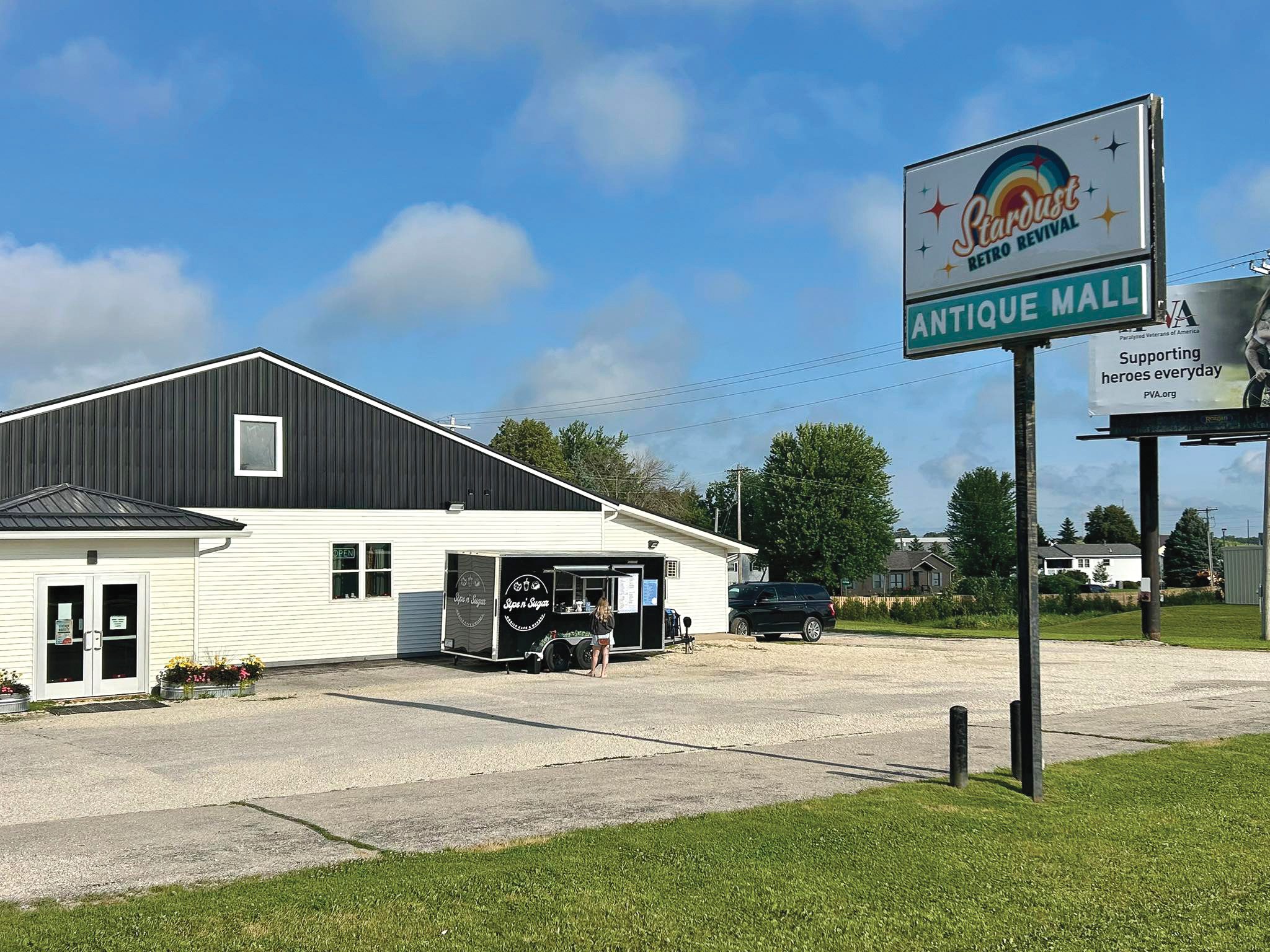
Stardust Retro Revival opened in March of 2025. / Photo courtesy Stardust Retro Revival
New Generations of Harmony has 85 vendors and more than 130 spaces in the nearly 10,000-square-foot antique mall. Stardust Retro Revival has 125 vendors and more than 144 spaces in over 11,000 square feet.
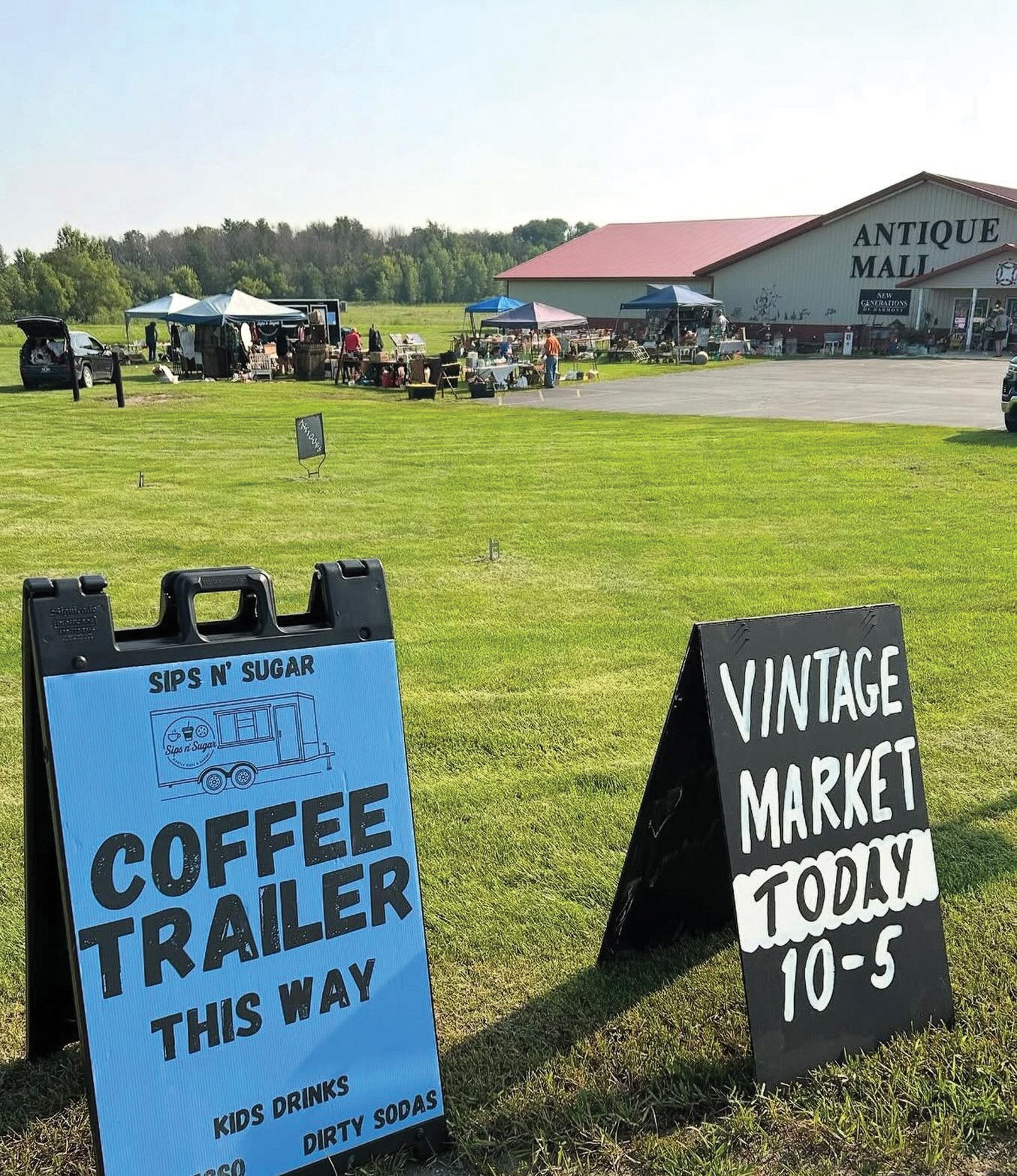
Both malls have a great mix of fun finds, but New Generations has more of an antiques focus and Stardust leans more toward vintage. “Our customers generally stop by both,” says Erica. “Having two malls so close together definitely makes Harmony an antiquing destination!”
Read on for insight into how these two fun, talented, and smart women run their “sister malls” in Harmony, Minnesota.
The Basics: Name: Erica Thilges, Monica Thilges Age: 48, 47 Businesses: New Generations of Harmony and Stardust Retro Revival Year Business Established: 2008 and 2025 Business addresses: New Generations of Harmony 50 Industrial Blvd NE Harmony, MN Stardust Retro Revival 605 Main Ave. N. Harmony, MN Websites: NewGenerationsOfHarmony.com • StardustRetroRevival.com
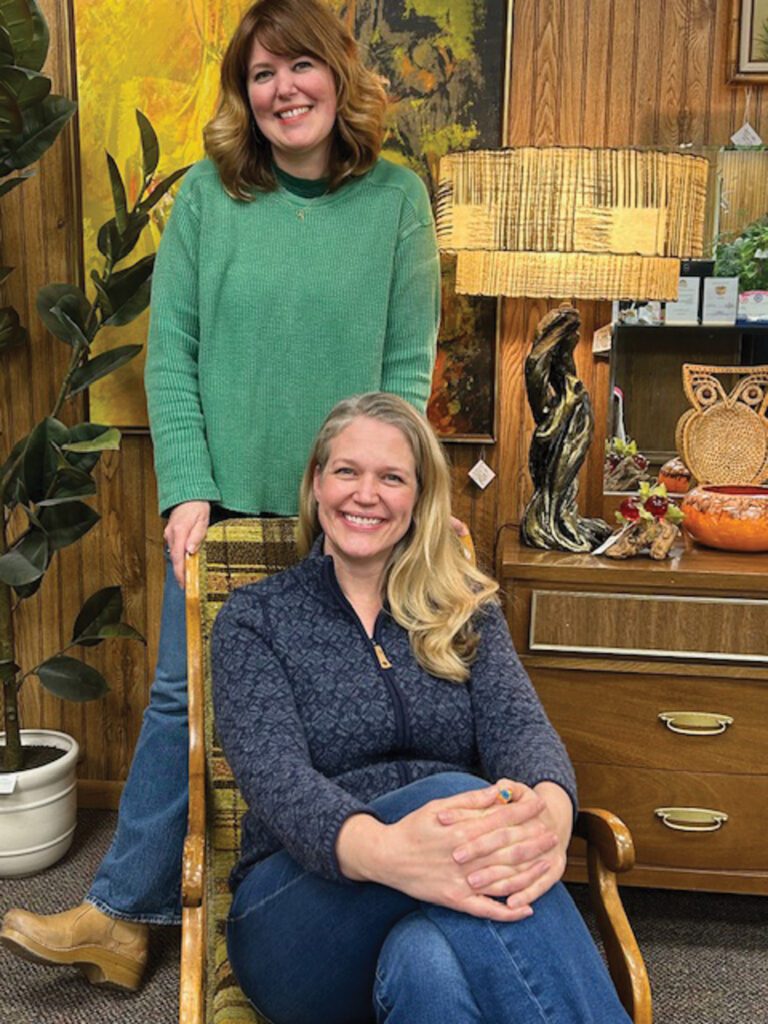
Erica Thilges (standing) and Monica Thilges run their ‘sister malls’ in Harmony, Minnesota. / Courtesy photo
1. Tell us about the “leap” moment. When/how did you decide to jump in and become your own boss?
Erica: Our parents, Joan and Harlan Thilges, bought the New Generations Mall in 2015 as a semiretirement venture after decades of running small businesses in Fairmont, Minnesota. By 2021, they were ready to fully retire. In the summer of 2021, I was ready for a change, so I moved to Harmony to learn the business from our dad. It was a good fit from the start, and I now co-own the mall with them.
Monica: We were sitting around the table in spring 2024 when Erica floated the idea of me investing in a new mall. Given that I have zero retail experience, she also offered to run it for me and sold me on the fact that it would essentially be a copy/paste of the New Generations business model – and they had a three-page-long wait list of vendors at the time.
My day job is in environmental sustainability, so I was intrigued – antique malls give usable items a new home and keep them out of the landfill. Then Erica casually mentioned that there was a long-vacant roller-skating rink just a half mile down the road from New Generations that might work. I am a sucker for a disco ball, and I really love the idea of saving a cool building that means something to a community, so I was hooked.
The building needed significant work – the kind of work that would cost more than the property – so it took a lot of effort to get it figured out. After closing on the property in December 2024, a team of local contractors helped to transform it and we were able to open the doors two and a half months later, on March 1. It was seriously impressive.
2. What’s the best thing about being your own boss?
Erica: For me, the best part about being my own boss is getting to evolve! If something isn’t working, we try something else!
Monica: Even though I technically own Stardust, I consider Erica to be the boss! She is so awesome at what she does.
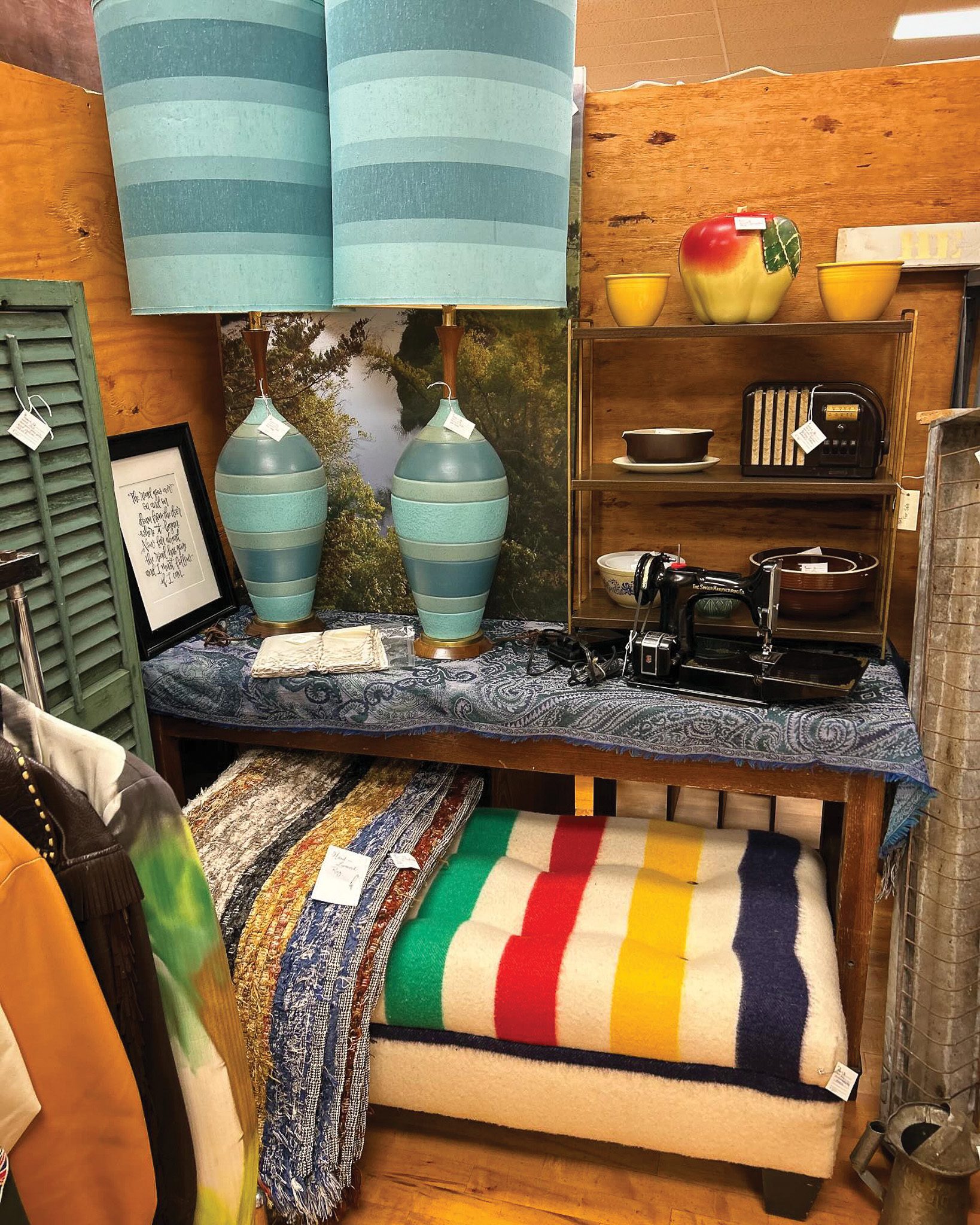
Vendors at Stardust Retro Revival lean a little more vintage. / Photo courtesy Stardust Retro Revival
3. How about the worst?
Erica: The worst part about running your own business is keeping up with the ever-changing federal and state laws.
Monica: Paying back all of those pesky loans – I’ll be doing that for a loooooong time!
4. Was there ever a hurdle where you just thought, “I can’t do this?” How did you overcome it?
Erica: Honestly, having my sister to collaborate with takes so much pressure off. The clarity she provides has made all the difference for me. I am, however, not looking forward to the day New Generations needs new carpet… But we’ll figure that out too!
Monica: After the rink sat empty on the market for something like six years, someone else put in a higher bid on the same day we made an offer. I crunched the numbers and realized that I really couldn’t go any higher, so I took a deep breath and let the dream go. Unfortunately for them, but fortunately for me, their offer fell through and I was able to get the building at the price that worked for this business. I think that it’s really important to know your financial limits when starting your own business, even if that means you have to walk away from it.
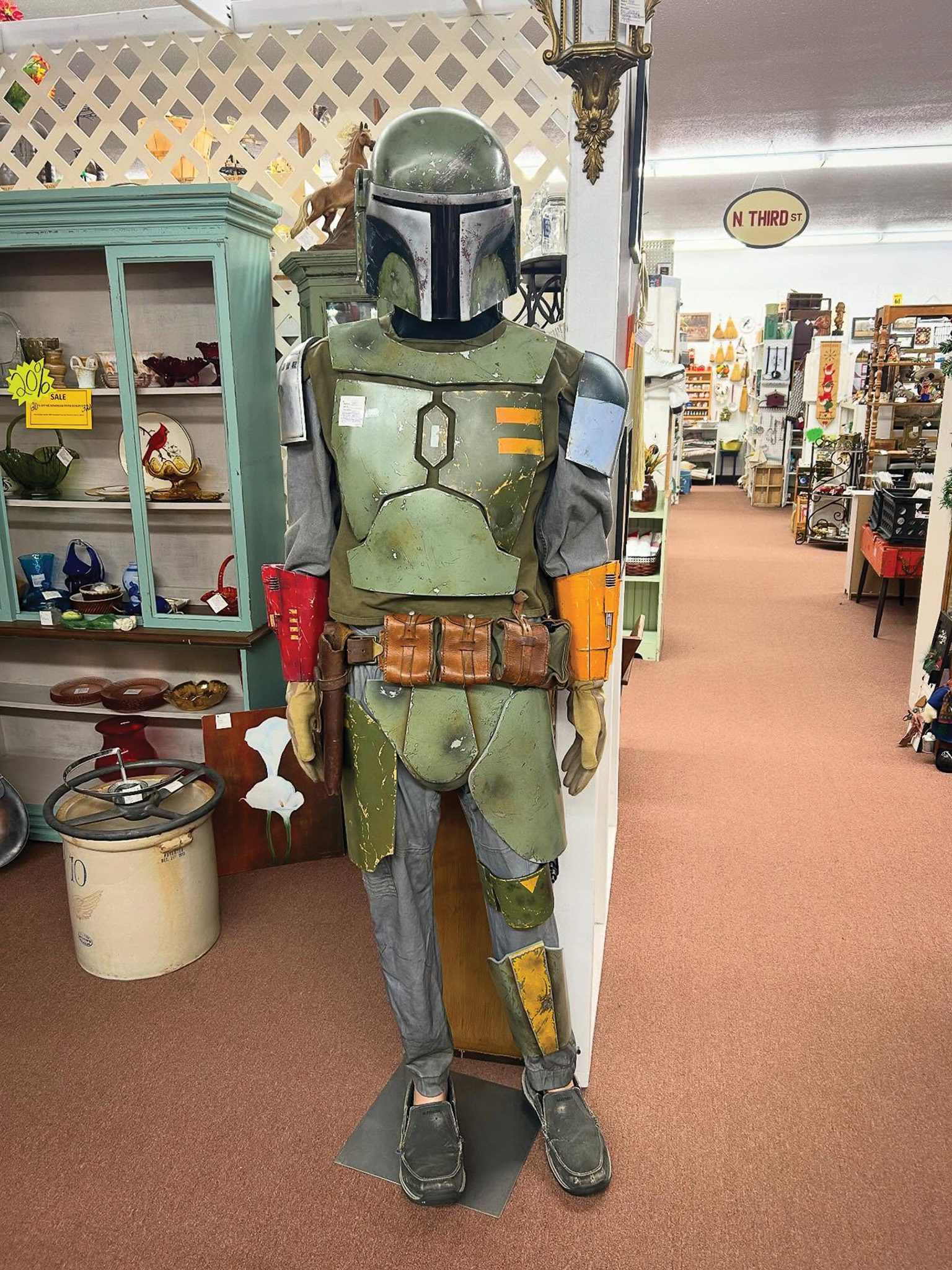
New Generations of Harmony has a ton of fun finds. / Photo courtesy New Generations of Harmony
5. Did you both come up with the name Stardust Retro Revival?
Erica: Coming up with the business name was the hardest part! Of course, friends and family all had loads of suggestions. My favorite is still, ‘Sister Monica’s Retro Revival’, but Monica vehemently put the kibosh on that. It came down to the wire, but we’re both happy with where we landed.
Monica: It took sooooo long to find a name. In the end, we liked the alliteration, the vintage vibe and… obviously, the nod to David Bowie. IT’S WAY BETTER THAN SOME WEIRD NAME MY SISTER WANTED.
Harlan & Joan Thilges / Courtesy photo
6. Any mentors/role models you look to/have looked to?
Erica: Our parents have been small business owners our entire lives, so I owe my work ethic to them. When I managed a bed & breakfast in Asheville, North Carolina, for 11 years, I worked for a lovely couple, Chris and Jim Muth. They taught me to manage with grace and understanding.
Monica: Ditto on what Erica said about our parents.
7. What’s the one thing you wish you had known before you started?
Erica: If I had known how welcoming and supportive this community is, I might have moved here sooner.
Monica: How to scrub really old and gross mystery things off of carpeted walls.
8. How do you manage your life/work balance?
Erica: The life/work balance can be tricky, for sure. The last few years, I’ve filled my life with a little too much volunteer work, but this year I’ve taken steps to reclaim my free time. I have some creative hobbies I’ve begun to reconnect with. Additionally, Monica and her family moved to Decorah a few months ago, so being surrounded by family is a welcome motivation to make time for living!
Monica: Moving my family from Madison to Decorah helped a lot, but I think it really comes down to two things for me:
1. Having a super competent business partner that I trust implicitly (it also helps that she does 99.9 percent of the work) – I would not do this with anyone other than Erica.
2. Finding joy in it – this business would often be super overwhelming and stressful if we were not having a ton of fun. I hope that vibe comes through when people walk through the doors!
A book display at New Generations. / Photo courtesy New Generations of Harmony
9. What are some of your favorite things you’ve seen come through the doors of New Generations and Stardust?
Erica: For me, seeing how vendors are displaying their merchandise is almost as exciting as what they bring in. I love a good booth overhaul! Many of our vendors are keeping up with vintage trends via social media, so it’s been fun to see those hot items come into the malls and promptly go to their new homes. Personally, I’m a fan of the variety our vendors bring in, especially the unique stuff. There is absolutely something for everyone!
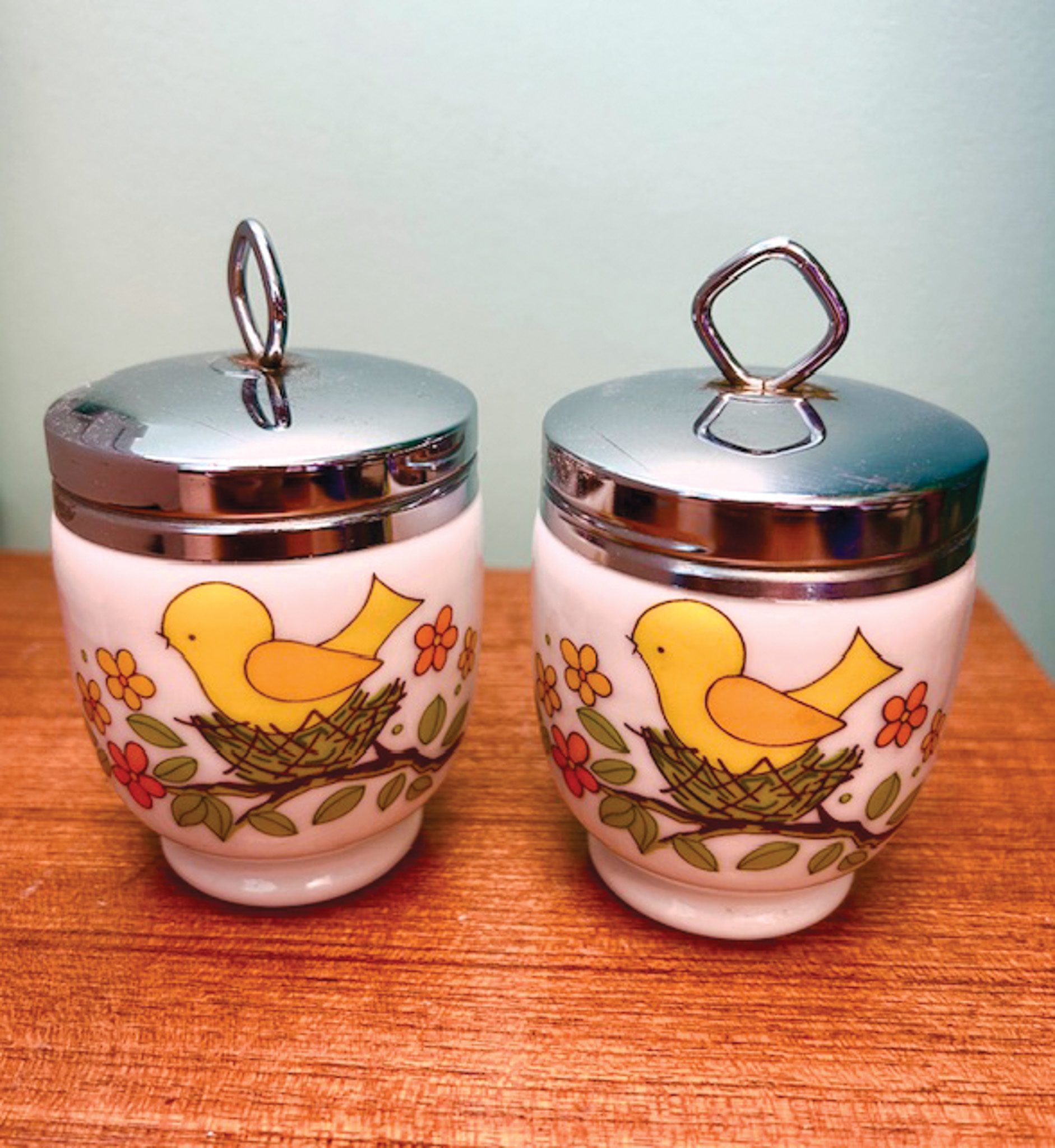
Monica: Man. So much fun stuff. There have been a lot of very cool vintage lamps, but I do love the kitsch. One of the first items I bought to resell at Stardust was particularly memorable – this really cute set of egg coddlers with little chicks on the front. I couldn’t get them open but didn’t think much of it. Well… when we finally got them open, we found the cremated remains of a guy named James. I promptly returned him (and the coddlers!) to the funeral home that cremated him and learned my lesson: Do not buy anything you can’t open.
The egg coddlers that Monica returned to the funeral home. / Photo courtesy Stardust Retro Revival
10. What keeps you inspired? Any quotes that keep you going?
Erica: I do love the people but I’m also all about ‘connections’. I’m inspired by how much our vendors, staff, and customers connect with each other over shared interests and nostalgia in both antique malls. There is a real sense of community here which makes the malls feel like ‘home’.
Monica: “Go a little bit out of your depth. And when you don’t feel that your feet are quite touching the bottom, you’re just about in the right place to do something exciting.” – David Bowie
Rural Iowa has much more to offer than endless corn fields and gravel roads. Near Decorah, an unexpectedly vibrant source of creation and community lives at the convergence of creeks and pine forests: South Bear School.
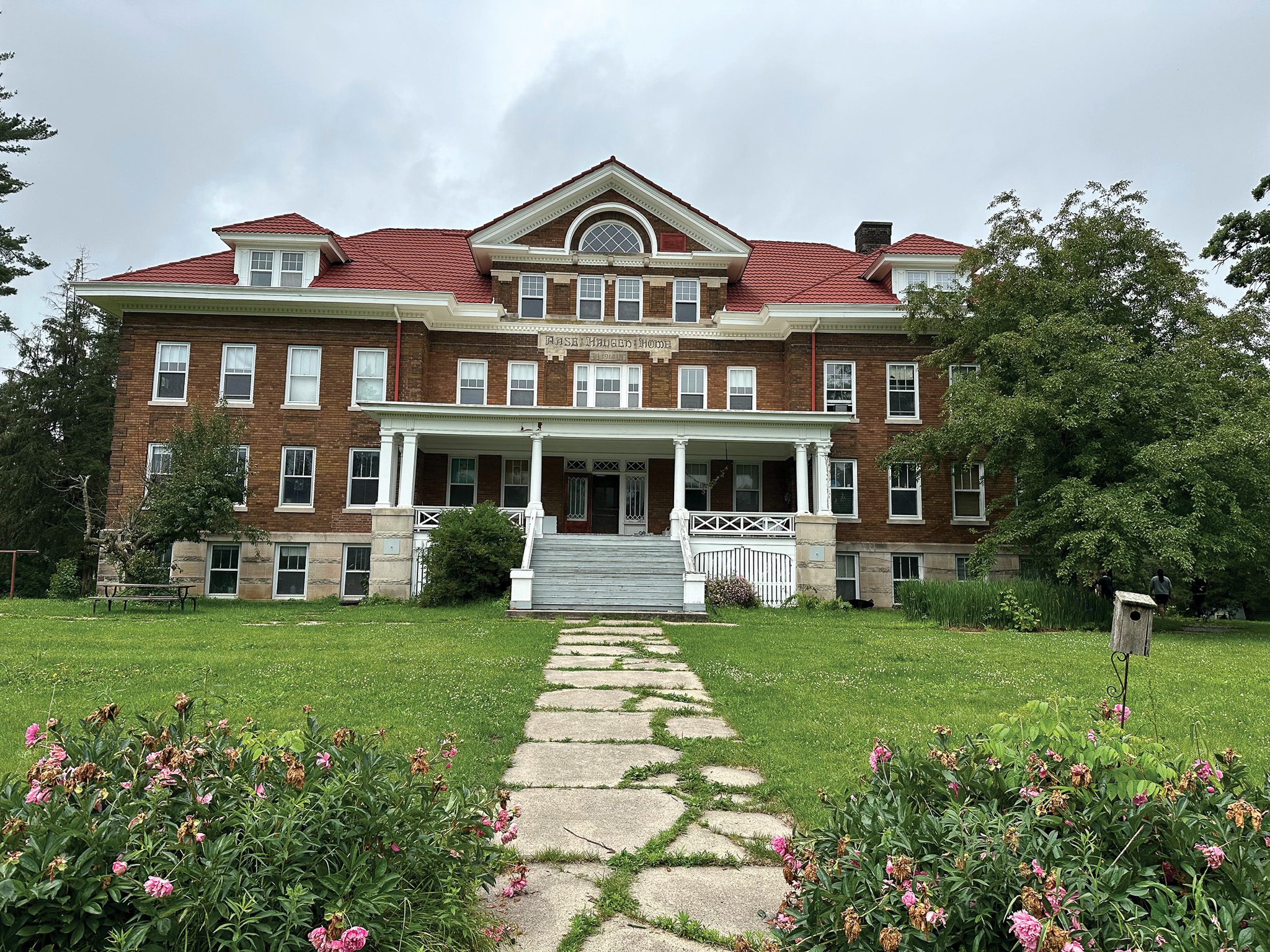
The art school’s idyllic property features a small cottage, two barns, and a monumental 65-room main building, which originally hosted a senior living and nursing home community from 1915 to the early 1960s. Over the last six decades, it has become a new sort of “home,” one that has hosted hundreds of creatives, artists, and wanderers.
The historic original Aase Haugen Home became South Bear School in 1976. / Photo courtesy South Bear School
South Bear School, founded in 1970 by Decorah residents Dean and Geraldine Schwarz, alongside their friend Doug Eckhart, has undergone countless changes over time, including a nearly 40-year hiatus from hosting their hallmark summer workshops. What hasn’t changed, however, is the Schwarz family’s commitment to maintaining a community of like-minded folks who champion rural arts and authentic craftsmanship.
Revitalized in 2020 by Dean’s children and grandchildren, South Bear School is once again a lively hub for learning and development. Hosting two weeks of rustic pottery courses each summer, as well as periodic weekend workshops, meditation retreats, music festivals, and other events, this magical place is well on its way to re-asserting itself as a vital center-point in Decorah’s creative culture.
“My siblings and I were incredibly lucky to have been raised in an artistic fashion,” says Maggie Schwarz, Dean’s granddaughter and South Bear’s current Executive Director. “It’s always been a goal of mine to make that kind of community and experience available to other people.”
The Birth of South Bear School
The depth of South Bear’s historical tradition can be traced to 20th century Germany, where Marguerite Wildenhain, the first woman to be designated as a master potter, studied ceramics under the prominent Bauhaus school. After being forced to flee Germany during World War II, Wildenhain immigrated to northern California and started the Pond Farm artists’ colony, where she ran a rigorous and disciplined summer pottery workshop that helped kickstart a studio pottery movement across America.
Born in Cedar Rapids, Iowa, Dean Schwarz studied ceramics at Iowa State Teachers College, then served in the US Navy, before spending three summers at Pond Farm as Marguerite’s apprentice and teaching assistant. Dean and Gerry settled in Northeast Iowa in the mid-1960s, where Dean taught at Luther College. By 1970, the Schwarzes and fellow Luther art professor Doug Eckhart decided it was high time to bring Pond Farm’s Bauhaus model of apprenticeship and artistic community-building to the Midwest.
Before South Bear found its current home, it was situated 20 miles away, in Highlandville, Iowa, a tiny town of less than 30 people. Dean and Gerry had purchased an abandoned hospital house and got to work converting its 14-rooms into dormitories for students and instructors. The adjacent barn was turned into a studio for pottery, one of the core artistic disciplines upon which South Bear School, named for the small creek running through Highlandville, was built.
Throughout those first few summers, students traveled from near and far to experience the collaborative environment of a traditional folk-art community. Though centered around pottery, painting, and poetry, the subjects taught at South Bear varied widely, and students were encouraged to explore various modes of thought and multi-disciplinary methods of creation.
After six wonderful and fruitful years in Highlandville, it was time to expand. In 1976, South Bear moved into the then-vacated, historic Aase Haugen campus located in a rural spot five miles southwest of Decorah. This new space offered endless opportunities for expansion, including the addition of classes in areas such as Women’s Studies, Stone Carving, Philosophy, and more, all taught by artists and professors from across the region. For the next several years, South Bear School supported a community of more than 100 artists and students during its nine-week programs each summer.
The Family Years
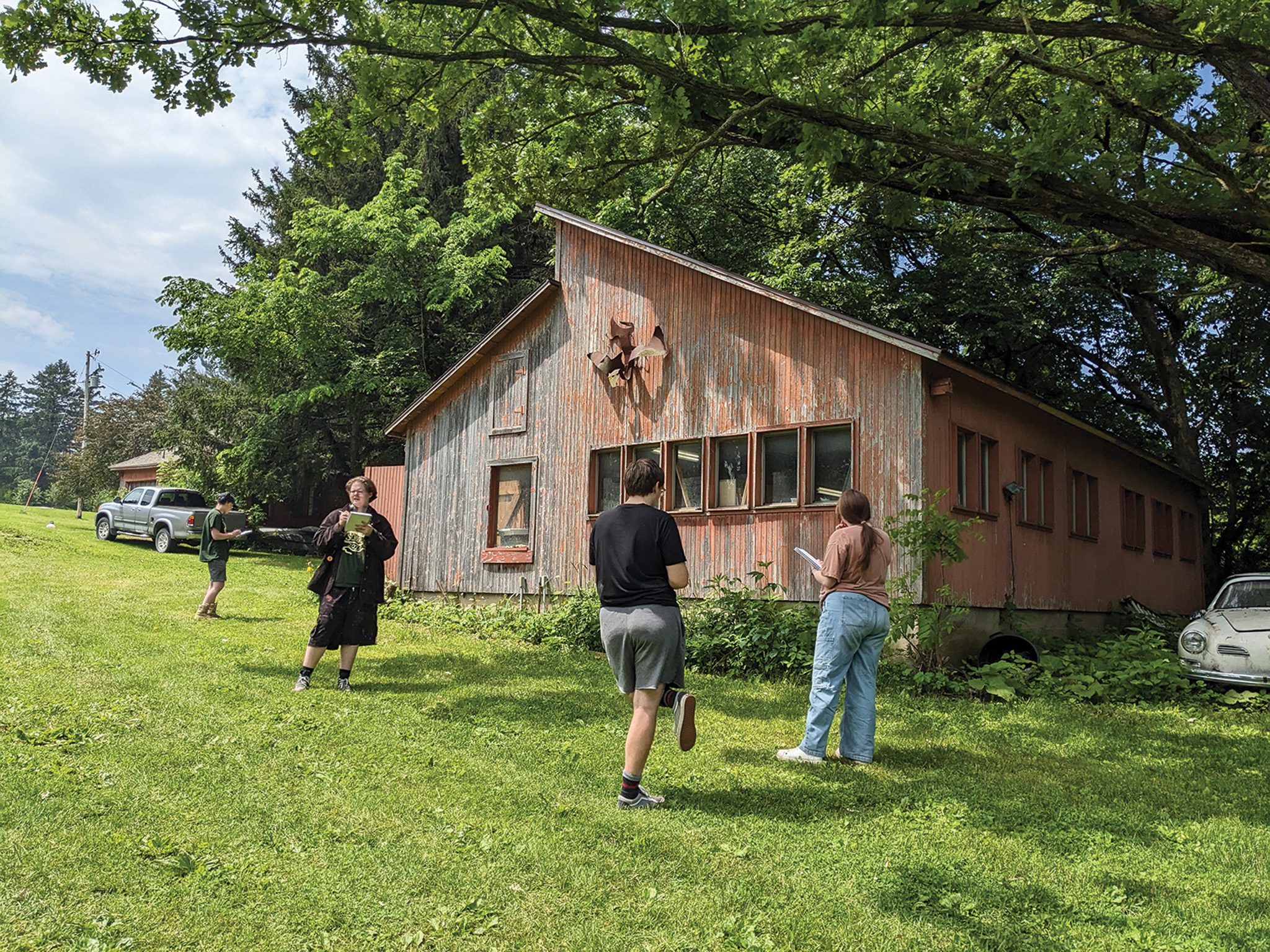
Though South Bear School summer programming ended in 1984, the connected, passionate spirit brought by the various cohorts of artists never left the property. When Maggie was born in 1999, there were four generations living in the historic main house, still carrying on the South Bear tradition of living and learning in community. By then, Dean had retired from Luther and was a full-time studio potter, working out of the basement studio in the winters and the chicken-barn-turned-studio in the summers.
The chicken-coop-turned-studio at South Bear’s current location. / Photo courtesy South Bear School
“I didn’t realize how uncommon our upbringing was,” says Maggie. “We essentially lived in a museum, and our grandma hosted Sunday lunches every week for family, friends, and visiting artists. Experiencing this depth of artistic discussion as a child was deeply influential and made me want to facilitate similar opportunities for others, even if on a smaller scale.”
Around 2019, Maggie, and her siblings, Will and Sophie, as well as their father, Lane, began thinking about bringing some of the fondly remembered workshops back to life. After a couple years of reaching out to past students and building a social media presence and new base of interested students, the first official South Bear School pottery workshop under new tutelage was held in 2021.
“So far, a lot of our advertising has been through word of mouth, passed down from folks who have some connection to South Bear’s past, whether it be as a student themselves, or someone who had relatives and parents that studied with Dean,” says Maggie. “We’re excited to start welcoming new audiences, such as college students and those who might be unfamiliar with the world of pottery, and building a multi-generational community of folks that come from diverse backgrounds and experiences.”
Summer Pottery Workshops
Currently, the summer pottery workshops are held for two consecutive weeks each year. While these workshops are heavily informed by and modeled after the original nine-week South Bear School programs, they are also designed to be accessible for all who are interested in learning more about the history of pottery and the joy of independent craftsmanship. Students are encouraged to pick the length of time that works best for them, whether that be the full two weeks, one week, or the weekend workshop.
New for Summer 2026 is the option to purchase single-day passes, perfect for those who are interested in experiencing South Bear’s atmosphere and trying out a kickwheel without committing to a full workshop.
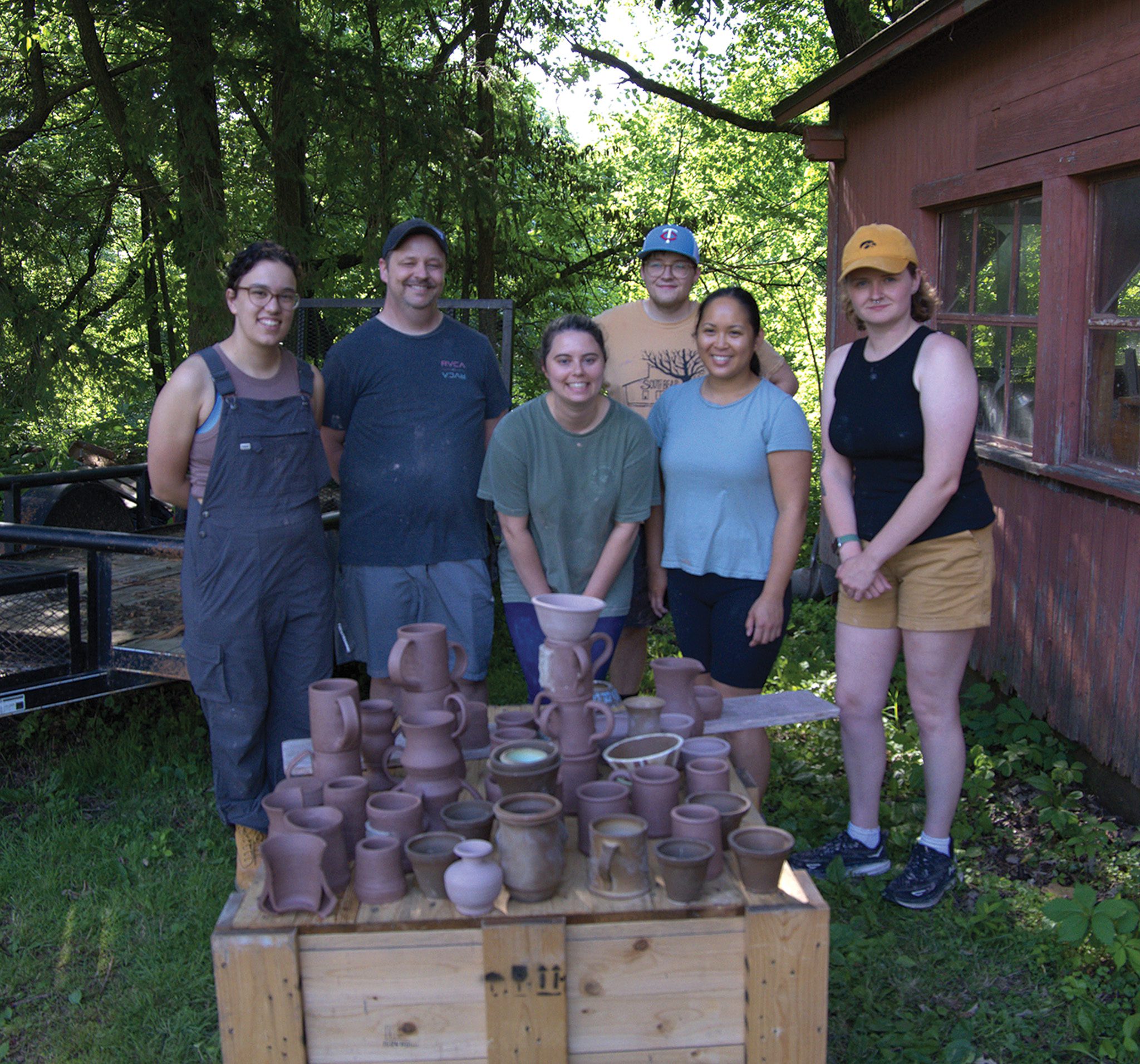
Some of the 2025 Weekend Workshop students with their creations. / Photo courtesy Maggie Schwarz
“We try to offer a variety of options, so everyone is able to join us in the act of creating, despite busy work and family schedules,” adds Maggie. “And with all of our instructors being volunteers who have their own separate careers and commitments, two weeks felt like a good place to start.”
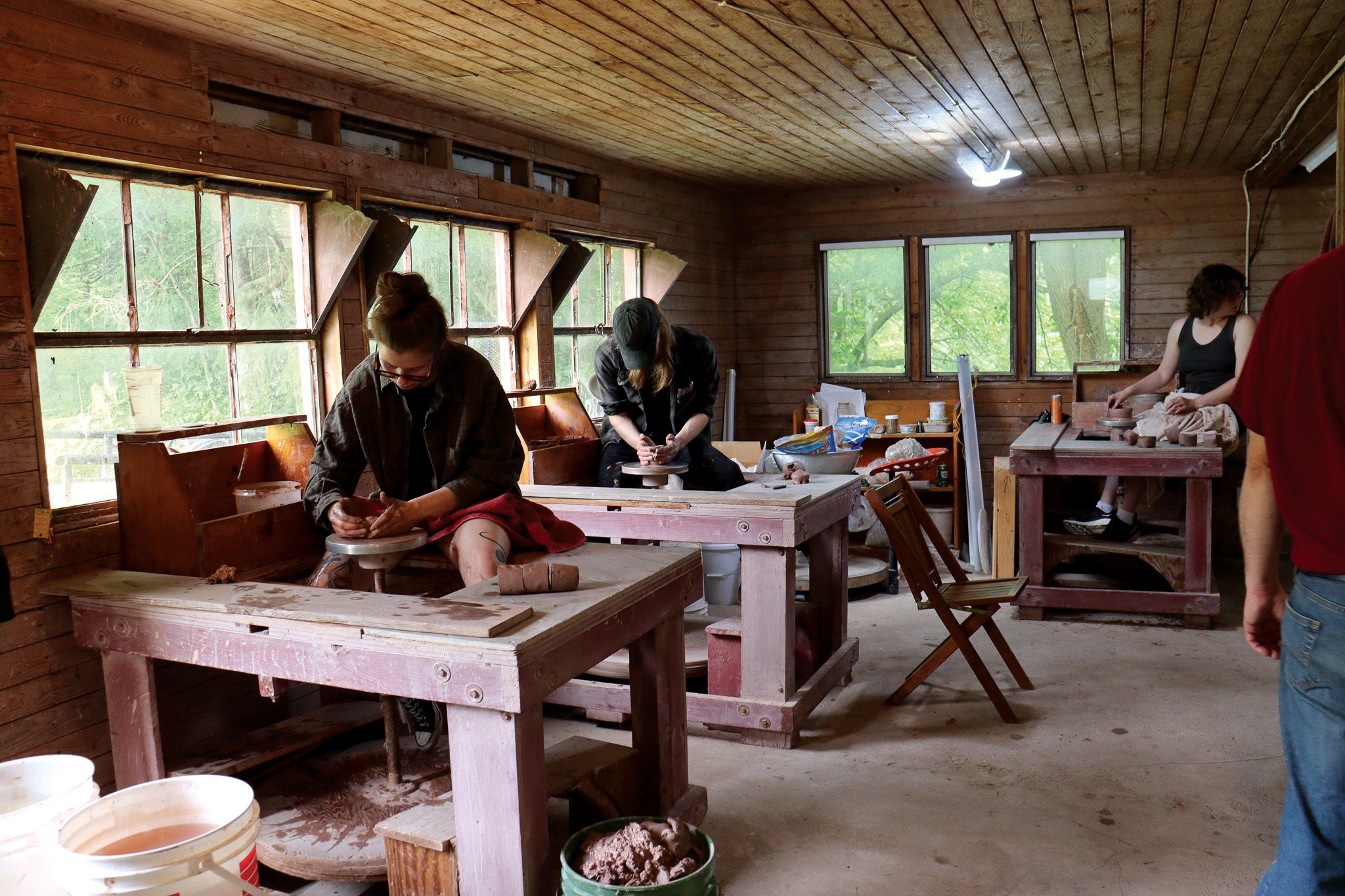
Held in the converted chicken barn, just down the hill from the main house, the workshops offer a rustic, authentic, and well-paced approach to pot-making. Rather than using electric pottery wheels like many modern-day teaching studios, South Bear students learn the analog way – on custom, wooden kick wheels based on Marguerite Wildenhain’s original design and handcrafted by the late Orville Running, who was an accomplished local artist and Luther College professor.
Upon entering the Summer Workshop, you are met with a rhythmic thumping sound, a product of the potters kicking the wooden flywheels to power their wheel. Throwing pots on a kickwheel is a very grounding, meditative process, requiring the potter to focus on their breathing and to carefully sync each movement to the rhythm of the wheel.
“Students who have previously worked on electric wheels are often intimidated by the concept of having to spin the wheel yourself,” says Maggie. “We find they end up really enjoying the process – there’s something very special about connecting with that ancient human ability to make beautiful art out of simple, rudimentary materials.”
South Bear summer pottery students follow a 16-form progression, a workshop structure that originated from Germany’s guild system and was brought by Marguerite Wildenhain to Pond Farm in California. Apprentices work alongside Master-level craftsmen, learning first to imitate technique and craftsmanship, before creating their own unique work and designs.
The first form begins with the simple dog dish – which is not actually used for pets, but as a glaze-catcher for larger pots. Each subsequent form introduces a new throwing skill.
The second, the flower pot, teaches potters to throw a pot that gradually gets wider near the top; next comes the bowl, which requires smooth, gradual curves, and that special attention be paid to the pot’s rim. By form six, the potter will produce a pot that is taller than it is wide, and by form 13, they will be combining multiple forms, thrown separately, into one finished pot.
“Each step teaches you how to get to the next one,” explains Maggie. “The forms build upon each other, and over time, you develop the critical eye needed to start creating your own forms and finding ways to express yourself through the clay.”
A large part of the Summer Workshop experience is spending time together and building relationships, both in and out of the studio. / Photo courtesy Maggie Schwarz
Celebrating 50 Years of South Bear!
2026 marks 50 years since South Bear School, and the Schwarz family, first came to call the historic Aase Haugen property home. To mark this exciting milestone, the upcoming year is one of jubilant celebration, featuring concerts, workshops, and reunions that honor the legacy of South Bear and highlight what’s to come for this tight-knit community.
Specific events to look forward to include the third iteration of Gays and Faes music festival, a 50th anniversary alumni gathering, and the annual Midsummer’s Eve party.
This year, the Summer Workshop will also see the revival of an integral part of South Bear’s foundation: the option to take shorter courses in a variety of artistic disciplines – such as printmaking, watercolors, and poetry – alongside the typical pottery instruction.
“Providing a learning environment that incorporates and encourages multiple disciplines is something we’re thrilled to begin offering again, as we grow,” says Maggie. “The goal is, and has always been, quite simple: to hold space for the learning and teaching of Bauhaus traditions that have been developed and passed down by humans for over six-hundred years.”
Clara Wodny is a 2025 graduate of Luther College, where she fell in love with the Driftless while studying English and Visual Communications. Currently residing up north in her hometown of Duluth, MN, she works in Aquatics Management at a YMCA and interns with LAMBDA Literary, a nonprofit organization whose mission is to nurture and advocate for LGBTQIA+ Writers.
Visit southbearschool.org for more info or to sign up for the Summer Workshop! Plus, save the date for these 2026 events: