

Sponsored by

Your Business!
Oh hey, lookie there – you’re looking here! Can you imagine how many people will look at YOUR business in this spot as well?! Let us write a super-fun business blurb for you, upload it and your logo, and watch the hits come in! Plus, you get to support positive news and community-building in the Driftless! Win + Win! Please reach out for more web sponsorship info – we’d love to make it happen!
Sponsored by

Agora Arts
Agora Arts is a contemporary fine craft gallery located in the heart of beautiful downtown Decorah, Iowa. Agora has been connecting art and artists to the people of the Driftless since 1992, carrying the work of 200+ talented American artists – including lovely art, jewelry, pottery, prints, sculpture, and more. A brainchild of Decorah native and Luther College grad, Gail Bolson-Magnuson, Agora is most definitely a must-stop spot on any visit to Decorah.
Growing Seeds for Peace
Sponsored by
Your Business!
Oh hey, lookie there – you’re looking here! Can you imagine how many people will look at YOUR business in this spot as well?! Let us write a super-fun business blurb for you, upload it and your logo, and watch the hits come in! Plus, you get to support positive news and community-building in the Driftless! Win + Win! Please reach out for more web sponsorship info – we’d love to make it happen!
Sponsored by
Agora Arts
Agora Arts is a contemporary fine craft gallery located in the heart of beautiful downtown Decorah, Iowa. Agora has been connecting art and artists to the people of the Driftless since 1992, carrying the work of 200+ talented American artists – including lovely art, jewelry, pottery, prints, sculpture, and more. A brainchild of Decorah native and Luther College grad, Gail Bolson-Magnuson, Agora is most definitely a must-stop spot on any visit to Decorah.
Approximately 8,500 miles away from the Driftless Region sits a town called Ban Prue Yai in the Khukhan District of Thailand. It is home to 20 villages, with 2,505 households dotted along the gently undulating hills of the Khorat Plateau. Despite its fertile floodplain landscape, this region struggles with poverty and limited access to nutritious food.
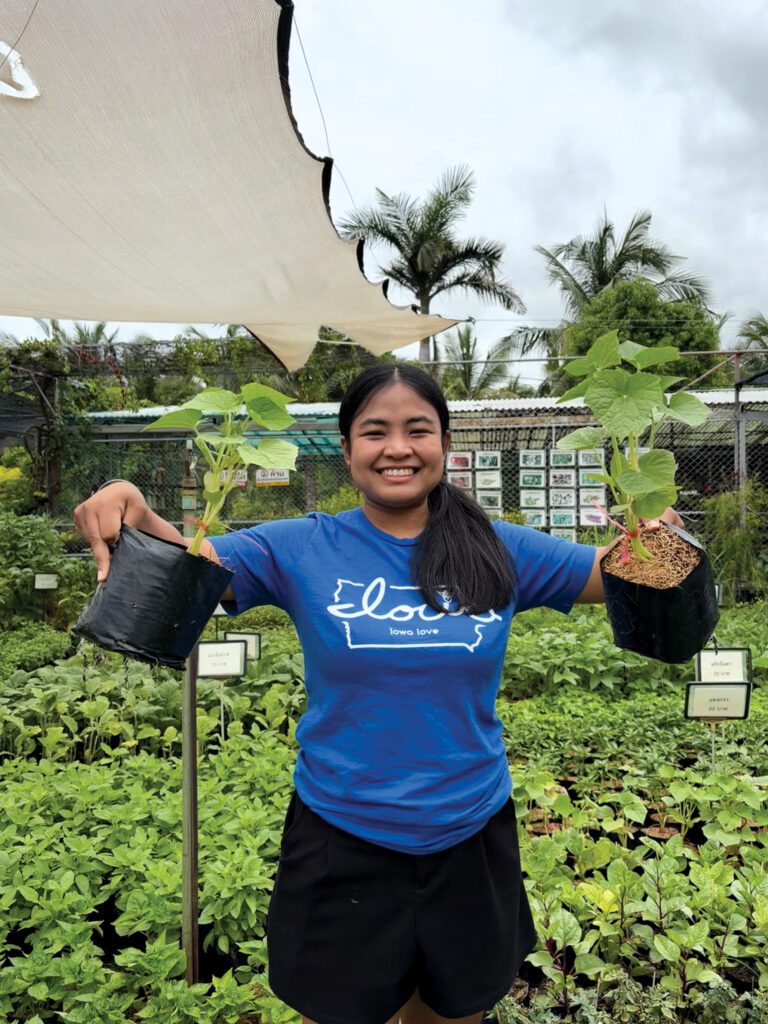
Phonnaphat Khamphinit, who goes by the name QQ, pronounced cue-cue, is a junior at Luther College in Decorah, Iowa. She grew up in Bangkok, Thailand, but as a child, she would visit her grandparents in Ban Prue Yai, where her father grew up.
“Every time I went there, I struggled with eating, even when I was a little kid,” QQ says. “It is really hard to access food. People mostly rely on only what they can grow at home.”
The average household income in this region of Thailand is $1,789 per year, and the primary occupation is rice farming. Farmers only make money during the harvest season, and rice prices tend to be insufficient to support a family. Commonly, working-age adults move to larger cities in search of economic opportunity, leaving their children, and their farms, in the care of elderly relatives. Children have limited access to education, and are at risk of undernutrition.
QQ saw these issues during visits to Ban Prue Yai and wanted to do something about it. She created a plan for a community farming initiative and submitted it for a Projects for Peace grant. Her project, Growing Seeds for Peace, was selected as one of the 2026 winners of a $10,000 grant.
Projects for Peace is a global program that funds undergraduate students who are pursuing innovative, scalable, and community-centered projects that address the root causes of conflict around the globe. The late internationalist and philanthropist Kathryn W. Davis founded Projects for Peace in 2007, celebrating her 100th birthday by supporting 100 Projects for Peace. This launched an effort to “bring about a mindset of preparing for peace, instead of preparing for war.” The grant is open to all undergraduate students currently enrolled at one of the Davis United World College Scholars Program partner schools. Since its establishment in 2007, Projects for Peace has funded more than 2,200 initiatives, and students from Luther College have been the recipients of 27 of these grants, supporting projects in more than 25 countries.
The mission statement of QQ’s Growing Seeds for Peace project is to create “a model of sustainable agriculture that inspires rural communities to learn, share, and shift mindsets toward self-reliance, while cultivating positive peace through food security and shared responsibility in connection with the land.”
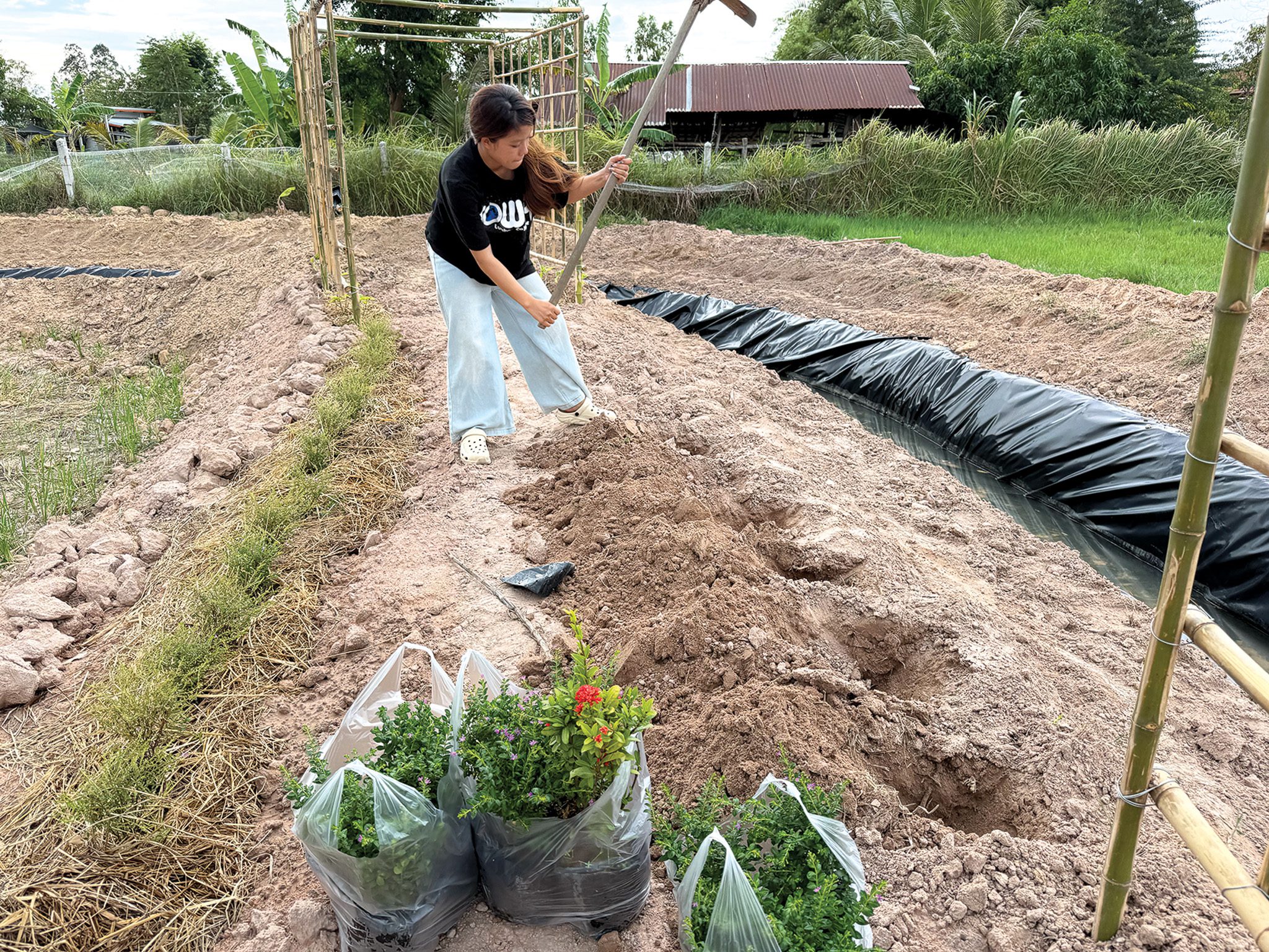
QQ sees the project as addressing three facets of peace: social, environmental, and economic. Social: Farming is a tool for peacebuilding through collective action and shared responsibility. Villagers work together, contributing the skills or tools they have, for the eventual return of the farm’s harvest for the community. Environmental: In using diversified crops along rice bunds, QQ hopes to improve soil health and food diversity, as well as reduce dependence on a singular seasonal rice harvest. Economic: Ideally, the community will experience greater economic stability, which will prevent some of the out-migration and family separation that divides the community.
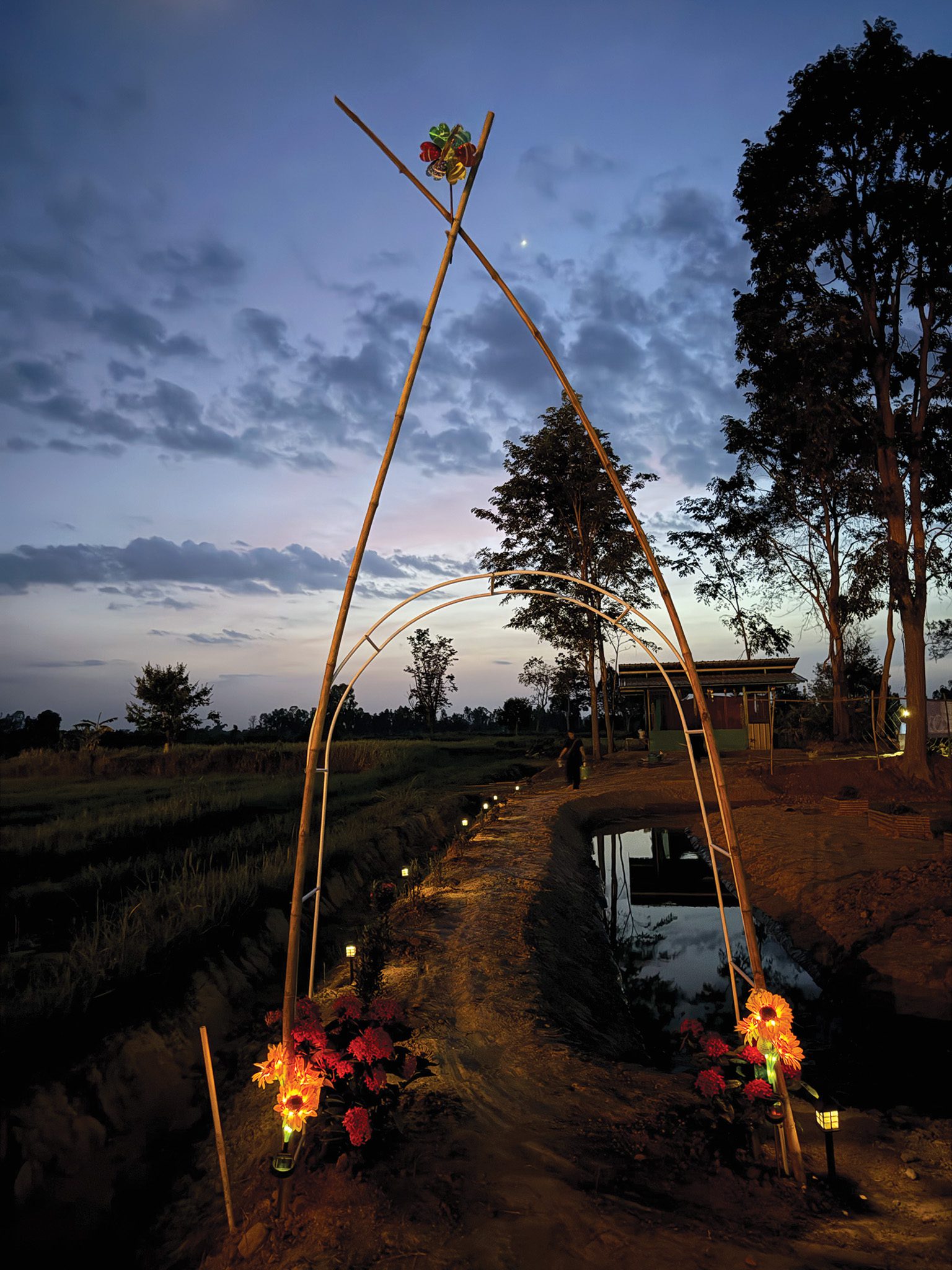
So, in the summer of 2026, QQ spent five weeks in Thailand, working with villagers and schoolchildren to create the first Growing Seeds for Peace demonstration farm. The farm was established on one rai of land, which is 0.4 acres, provided by QQ’s family. Following the Khok Nong Na model, it includes a micro-pond, mixed crops, and small livestock like chickens and fish. (Khok means mound, nong means pond, and na means rice field.)
Promoted by King Rama IX after the 1997 Asian economic crisis, the Khok Nong Na model is designed to shift agricultural practices away from revenue driven corporate mono-cropping, and towards self-sustainable economy. This integrated farming system is similar to permaculture design, and agroforestry. Farms are divided into proportionate sections of water, horticultural forest, rice paddies, and living space. The Khok Nong Na model has been present in Thailand for many years, but debt, agrochemical lobbyists, and the cost of transitioning from a mono-cropping system have prevented farmers from fully embracing the model. Recognizing its value, the Thai government has now started to create regional grant programs for Khok Nong Na farming, and schools of all levels are required to integrate the model within their curriculum.
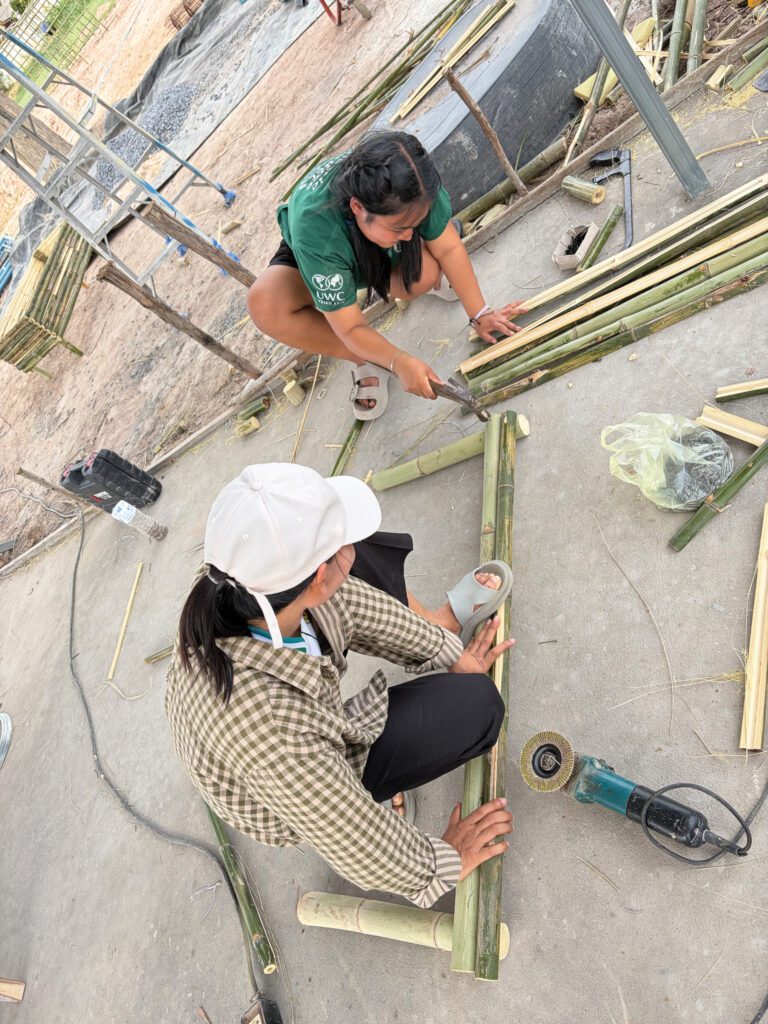
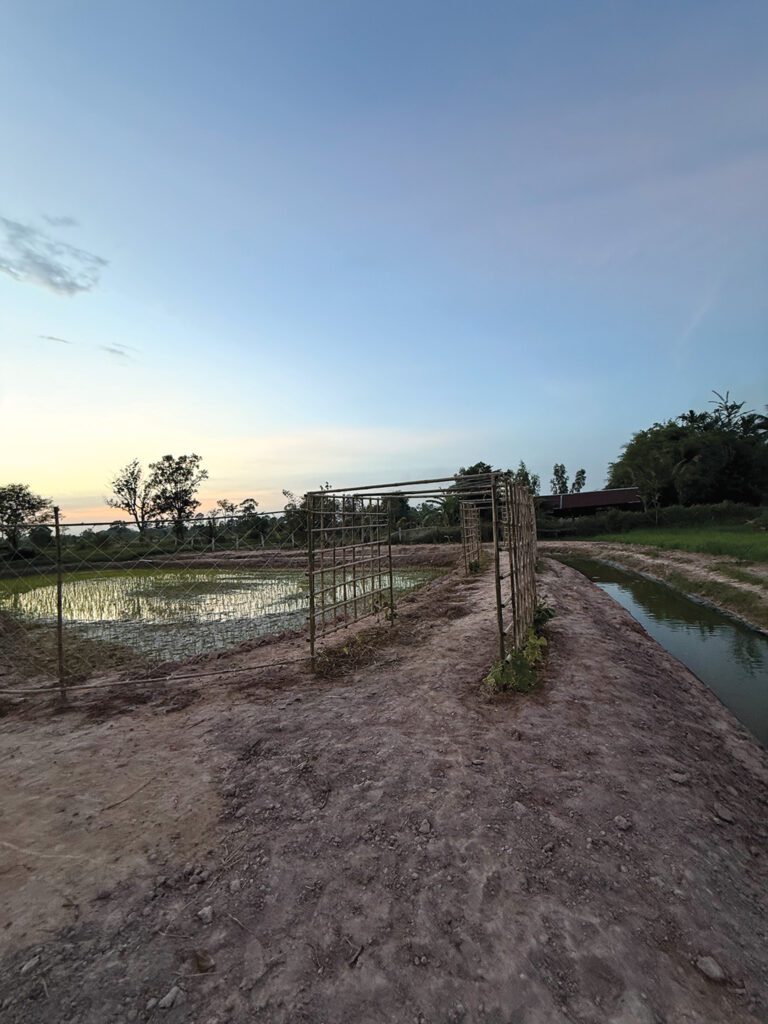
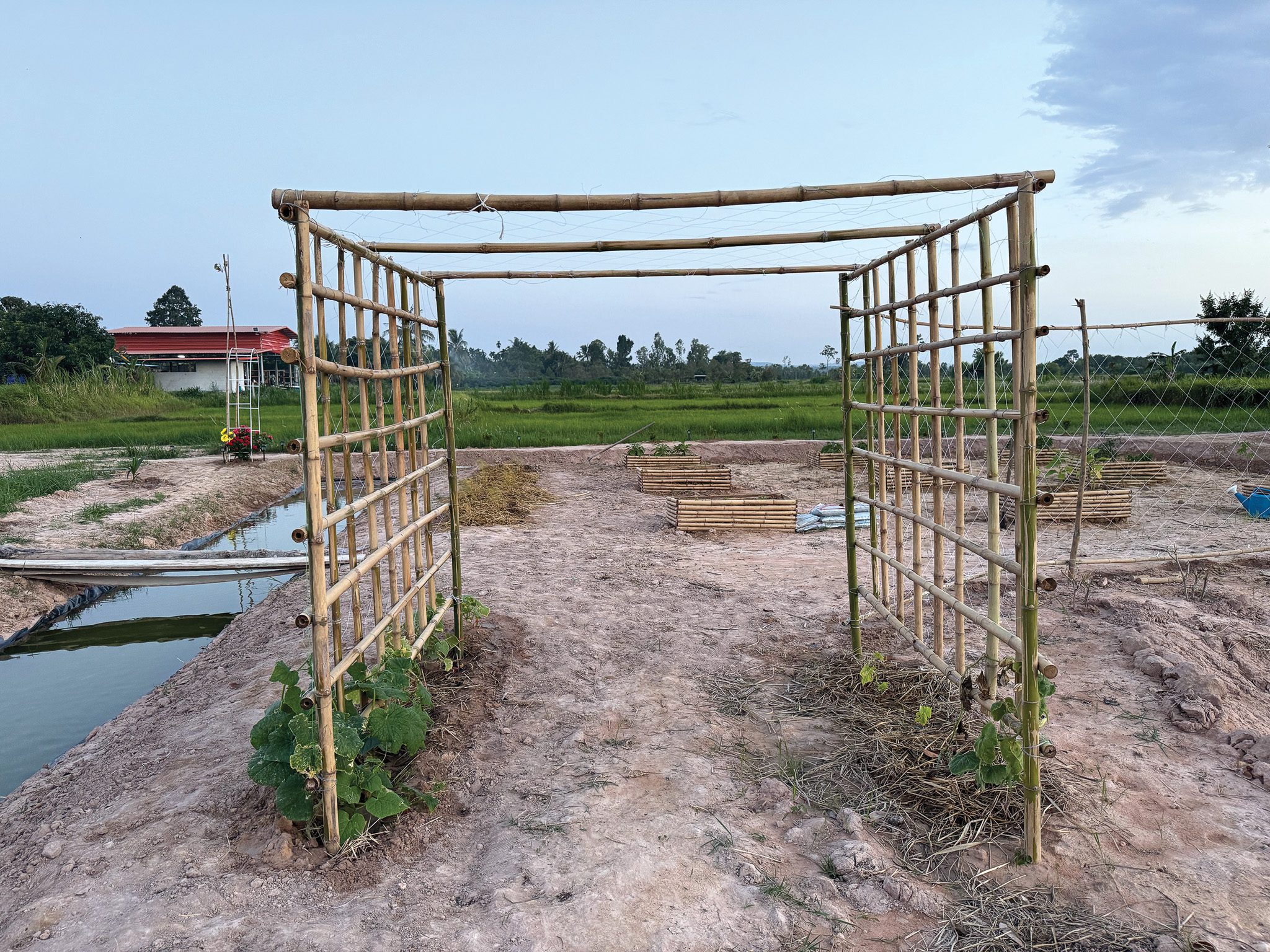
QQ’s project is based around the school in Ban Prue Yai, which serves children from kindergarten through ninth grade. In the first phase of Growing Seeds for Peace, QQ met with the school and villagers to fully understand community needs, like preferred crops and lunch shortages. Community members and students worked to build the farm together: preparing the soil, constructing rice bunds, and choosing mixed crops that fit their diet.
Coordinated visits with the local school will integrate curriculum like planting vegetables, saving seeds, and making compost. Harvests will be shared with the school for their lunch program, and community members will benefit from extra harvests. Villagers can also observe the functionality of mixed crop bunds and micro-pond and explore the possibilities of their home farms.
“The younger kids helped mix the soil and plant smaller vegetables, while the older students helped with more challenging jobs like digging holes, planting bigger trees, and learning how the water system worked” QQ says. “Every job mattered, so everyone played an important role.”
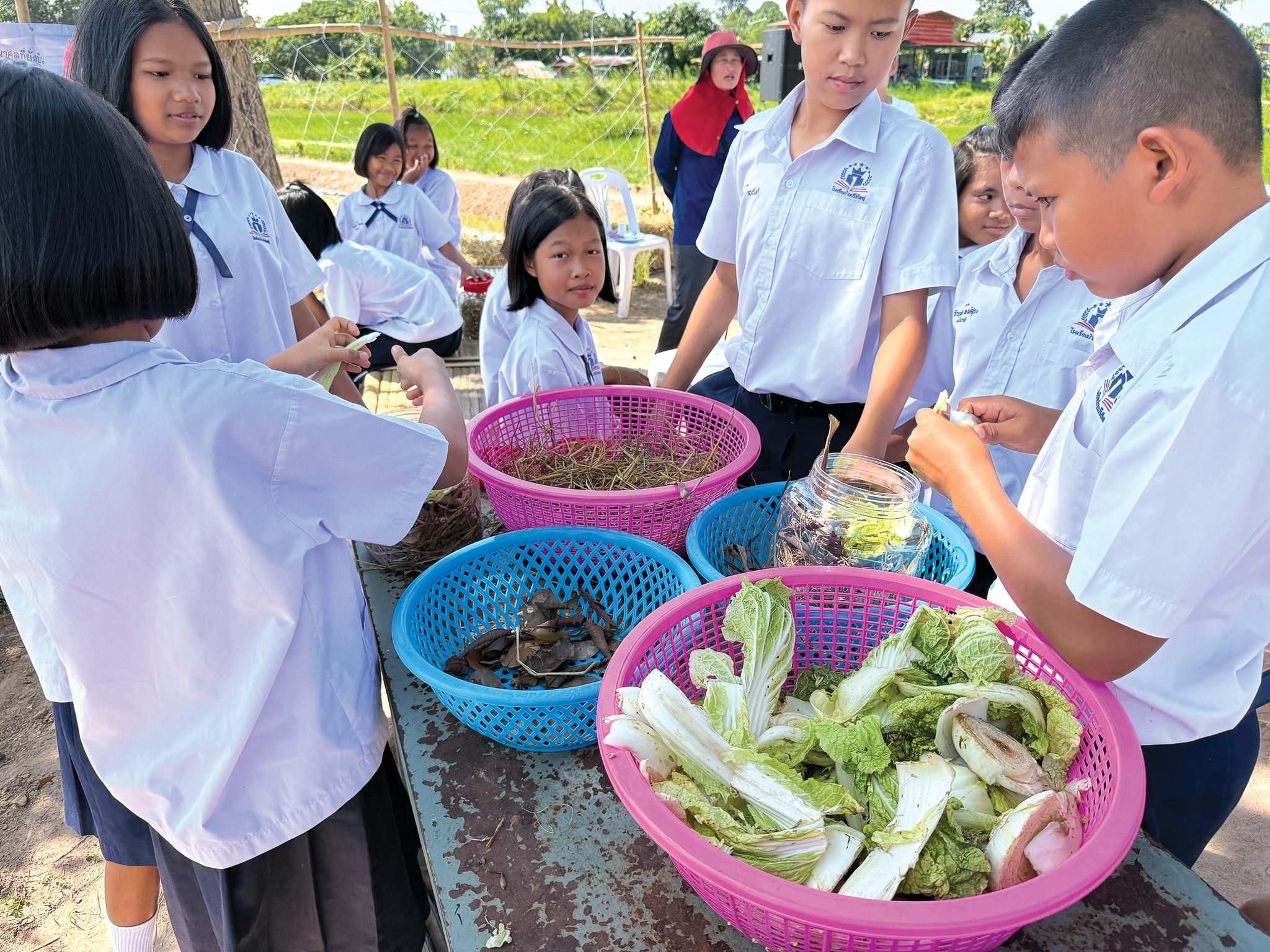
With the money from the Projects for Peace grant, Growing Seeds for Peace was also able to pay villagers to help build the farm, circulating additional income within the community. More than 20 villagers and 50 students actively participated. It was an opportunity for problem solving and education for all the people involved, QQ included.
“Sometimes I didn’t know the names of certain plants, but the students did, so we ended up teaching each other,” QQ says. “It felt like we were all putting together different pieces of a puzzle. It was a little chaotic because they were young and super excited to try everything, but that made it even more fun. At the end, I went over everything we had done together, and I realized they had actually learned a lot. I hope they’ll be able to take what they learned back home and maybe even use some of those ideas with their families.”
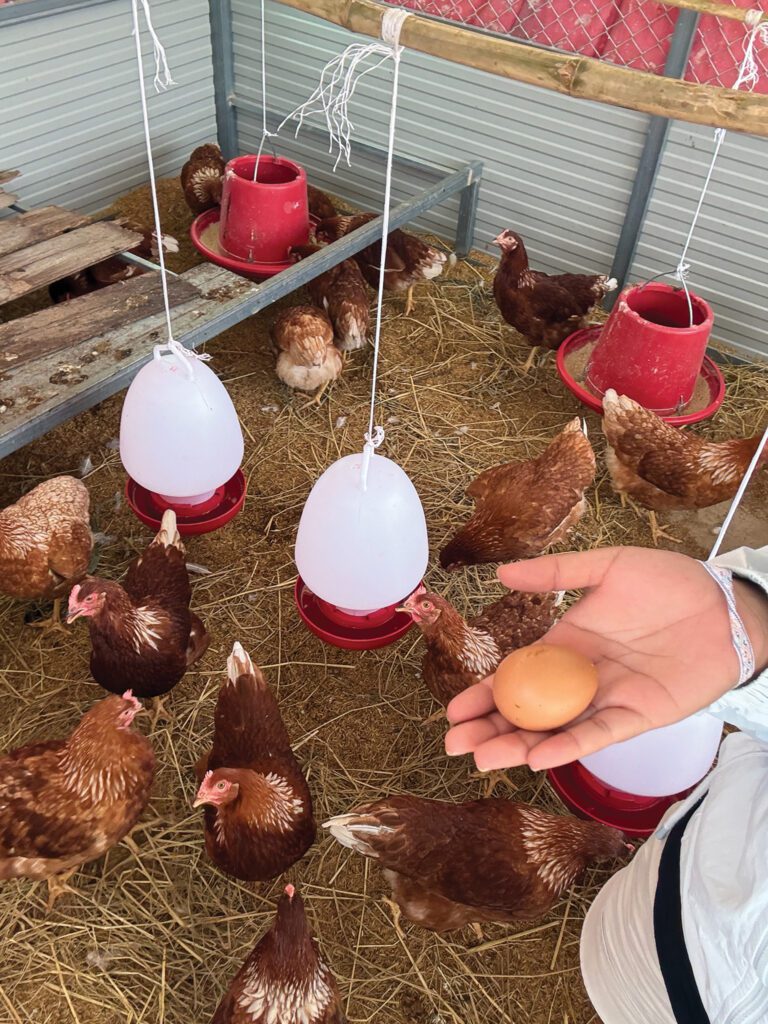
After digging a micro-pond, preparing the soil and land, constructing an animal stall, tool shed, vegetable plots, and a food pantry, QQ and her team also planted banana, papaya, guava, and mango trees. They added bamboo shoots, as well as Chinese kale, lettuce, and herbs. Then they stocked the pond with fish and added chickens to the micro-farm.
“It was my first time building a vegetable trellis, cutting wood, and cutting bamboo. Other people learned how to mix nutrient-rich soil, take care of the fish, and understand how the water system works,” QQ says. “That was one of the best parts of the project: We were all learning from each other. It made me really happy to see everyone laughing, smiling, and having fun while we worked.”
QQ looks forward to seeing how the project progresses in the future.
“I hope to see all the fruit trees fully grown and producing a harvest every year,” QQ says. “I hope the farm can continue to provide food for the community and eventually be able to support other people beyond the first group of participants. In the future, I would also love to develop the farm into a smart farm by using technology to make farming more efficient and sustainable. My dream is for this project to become a long-term community space that not only grows food, but also creates learning opportunities, supports local families, and inspires other communities to build something similar.”
The farm will be managed by QQ’s father, an engineer-turned-farmer, along with a committee composed of school community members, villagers, and a student representative. Eventually, QQ plans to partner with United World College (UWC) Thailand, a school QQ attended before coming to Luther. UWC Thailand is in a global network of schools and colleges that aims to promote intercultural understanding. Students from UWC schools participate in an annual experiential learning week, and QQ plans to have them visit the Growing Seeds for Peace farm to participate in farm maintenance, learn about farming, and bring new ideas and hands-on support to further meet the needs of the community.
On top of the Projects for Peace grant, QQ took on a research project about rice policy and farmer equity in the Asia-Pacific region this summer. She also received a Steen Fellowship, which supports student-led investigative research projects that relate to their field of study. QQ investigated how rice policy designs across several Asia-Pacific nations can affect economic risk and opportunity for small-scale rice farmers. After finishing her degree in political science and international studies at Luther in 2028, QQ eventually hopes to work as a policy analyst at the United Nations.
Growing Seeds for Peace is a project rooted in agriculture, but QQ hopes that it can grow into a space that welcomes people from backgrounds beyond agriculture, allowing an entire community to find a sense of belonging. She believes that human connection and understanding are essential to the process of healing divisions.
“I see this farm as more than just a place to grow food,” QQ says. “I want it to become a space where people can come together, spend time with one another, and naturally interact. To me, that is a real form of peace by creating a place where people feel connected, supported, and part of a community.”
Niamh Mee
Niamh Mee graduated from Luther College in 2026 with a degree in English, and is pursuing a master’s degree in journalism. Based in Saint Paul, MN, she is an adventurer who loves to meet new people, and work with her hands.
Learn More
Projects for Peace is open to students enrolled at a Davis United World College Scholars Program partner school. Managed by Middlebury College in California, Projects for Peace has funded more than 2,200 initiatives, and students from Luther College have been the recipients of 27 of these grants, supporting projects in more than 25 countries.
Learn more at middlebury.edu/projects-for-peace