

Sponsored by

Your Business!
Oh hey, lookie there – you’re looking here! Can you imagine how many people will look at YOUR business in this spot as well?! Let us write a super-fun business blurb for you, upload it and your logo, and watch the hits come in! Plus, you get to support positive news and community-building in the Driftless! Win + Win! Please reach out for more web sponsorship info – we’d love to make it happen!
Sponsored by

Agora Arts
Agora Arts is a contemporary fine craft gallery located in the heart of beautiful downtown Decorah, Iowa. Agora has been connecting art and artists to the people of the Driftless since 1992, carrying the work of 200+ talented American artists – including lovely art, jewelry, pottery, prints, sculpture, and more. A brainchild of Decorah native and Luther College grad, Gail Bolson-Magnuson, Agora is most definitely a must-stop spot on any visit to Decorah.
Southern Wings
Sponsored by
Your Business!
Oh hey, lookie there – you’re looking here! Can you imagine how many people will look at YOUR business in this spot as well?! Let us write a super-fun business blurb for you, upload it and your logo, and watch the hits come in! Plus, you get to support positive news and community-building in the Driftless! Win + Win! Please reach out for more web sponsorship info – we’d love to make it happen!
Sponsored by
Agora Arts
Agora Arts is a contemporary fine craft gallery located in the heart of beautiful downtown Decorah, Iowa. Agora has been connecting art and artists to the people of the Driftless since 1992, carrying the work of 200+ talented American artists – including lovely art, jewelry, pottery, prints, sculpture, and more. A brainchild of Decorah native and Luther College grad, Gail Bolson-Magnuson, Agora is most definitely a must-stop spot on any visit to Decorah.
As summer wanes and the goldenrods begin to flower, shortening days give rise to physiological changes in birds, too. Migratory species become restless, increase food uptake, and add layers of fat in anticipation of the most demanding and perilous event of their peripatetic lives – migration.
Then, responding to internal cues and prevailing weather conditions, they leave their breeding grounds for warmer climes. Their numbers are legion. It is estimated up to five billion birds depart Canada’s vast boreal forest every fall. Sweeping southward on a broad front, they’re joined by hundreds of millions more from the United States. It is a spectacle of global proportions, rivaling even the great wildebeest migration of Africa’s Serengeti.
For songbirds, fall migration is a leisurely affair, notable for its silence when compared to the high-octane vocalizations of inbound spring migrants. It is dominated by somber-plumed birds. Most species of warblers trade their sparkling spring duds for subdued greens and browns, the equivalent of avian khakis.
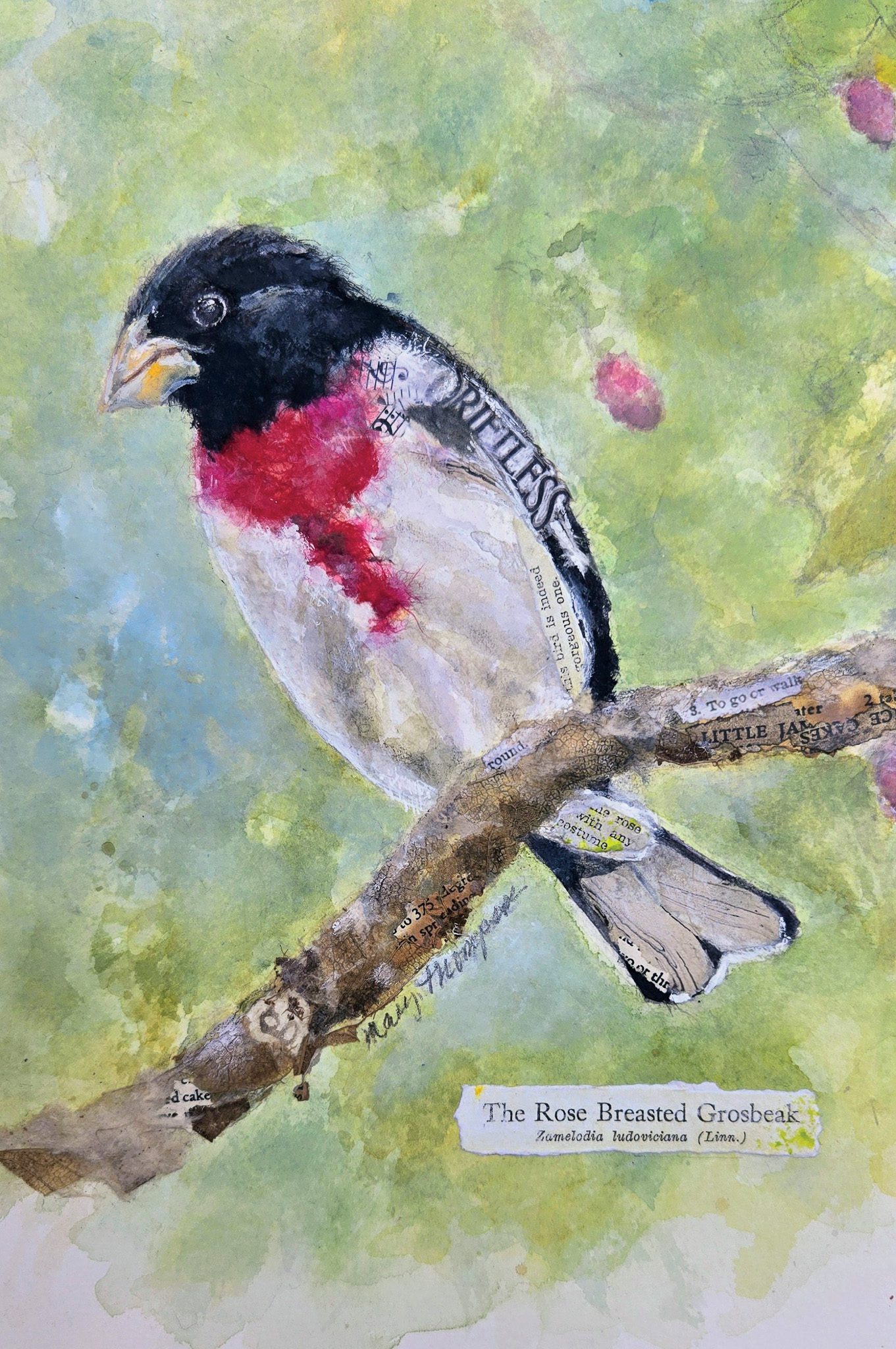
Many, like the canopy dwelling Cerulean Warbler and the incessantly musical Red-eyed Vireo, will spend two months traveling to their ancestral wintering grounds in South America. Others, like the tuxedoed Rose-breasted Grosbeak, will abbreviate their autumnal journeys, avoiding the rigors of a frigid winter by settling in tropical forests extending from Guatemala to Panama.
Landbird migration in the Driftless peaks by mid-September with the passage of glittering hummingbirds and a vanguard of warblers, vireos, grosbeaks, and orioles. Earth-toned northern thrushes – Hermit, Swainson’s, and Gray-cheeked – depart by early October. Hungry hawks and falcons quietly trail the flocks, snatching unsuspecting migrators along the way. Brown-hued sparrows comprise the rear guard, flitting south by late October.
The waterbirds’ migration follows suit. Blue-winged Teal, one of the smallest North American ducks, and Wood Ducks, perhaps the gaudiest, begin arriving on the Mississippi River en masse by early September. They beat a hasty retreat southward by October, just as the dabbling ducks – so named for their habit of sticking their heads under water to feed while their tails point skyward – begin to arrive. The roster of “dabblers” includes Mallards, Northern Pintails, Gadwall, and American Widgeon, all of which gather in large congregations known as rafts to fatten on aquatic plants, insects, and snails until cold weather pushes them south of the snowline. Diving ducks – Canvasbacks, Redheads, Ring-necked Ducks, goldeneye, and mergansers – are made of tougher stuff. They arrive throughout October, just ahead of cold, Canadian air masses. While feeding, they submerge completely, sometimes diving to depths of 30 feet to plumb the river for fish, aquatic invertebrates (snails, mussels, and crayfish), and plant tubers. They remain on the river until November ice forces their departure.
Fall migration ends with a literal splash as flocks of snow-white Tundra Swans arrive from arctic breeding grounds by early November. Their enormity – five feet long from bill to tail with a six-foot wingspan – contributes to the spectacle of swan migration. Up to 45 percent of North America’s eastern population of Tundra Swans stages (i.e. stops to rest and feed) on the Upper Mississippi River every year. It’s possible to see 10,000 or more these beautiful birds in a single day. Their collective vocalizations add a delightful sonic dimension to fall migration. As with diving ducks, river ice sends them packing, all the way to the East Coast’s Chesapeake Bay for winter. Until they depart, Reick’s Lake Park north of Alma, Wisconsin, and the Brownsville Wildlife Overlook, south of Brownsville, Minnesota, offer excellent swan viewing opportunities.
This autumn, as you’re putting your gardens to bed for the season, consider the miracle of fall migration. And before Old Man Winter sets up shop, head over to the big river to delight in a “swandezvous.”

Mary & Craig Thompson
Mary and Craig Thompson live in the bluffs north of La Crosse. On moonlit nights in November, they enjoy bundling up and heading outside to hear the ancient calls of migrating swans.