Aryn Henning Nichols

Mental Health Strategies for Finding Easeful Motivation

Summer is often considered a season of heightened productivity. The natural world is blooming and fruitful, and long days lend a boost of energy. Warm weather bucket lists and projects abound, with life moving at a hurried pace around us. 

Still, amidst all that bustle, we require rest and relaxation. Even on our most invigorated days we know our motivation will eventually wane. That’s where easeful motivation comes in. It’s the idea that motivation is limited, so we need to use it mindfully. And that adding a little ease in the pursuit of our goals can help us find pleasure along the way.  

So how can we invest our energy more intentionally? Read on for psychology informed insights for finding easeful motivation.  

Build Sustainable Motivation

There are two types of motivation: extrinsic and intrinsic. 

Extrinsic motivation comes from outside of ourselves, often to gain something (like money, praise, or even a relationship) or to avoid something (like rejection or pain). For example, you’re motivated to develop a new skill so you can gain more money. Or you’re motivated to start running to win a race or impress a friend. Extrinsic motivation can be more helpful for short-term goals, because we tend to lose motivation once our goal is realized. 

Intrinsic motivation comes from within. It is often self-reinforcing, because the behaviors we’re motivated to engage in enhance positive feelings or help with personal growth. This might look like learning to play guitar because you find the music relaxing. Or taking up pottery simply because it’s something you’ve always wanted to try. Intrinsic motivation is typically longer lasting. That’s because the emotions we experience – like joy or fascination – can sustain (and even enhance) our intrinsic motivation into the future.  

One is not better than the other when comparing intrinsic and extrinsic motivation, but it’s still worthwhile to explore where our motivation is coming from, and why. 

Shutterstock image

Explore Your Motivation 

When looking to create lasting motivation, try to align your goals with both your values and present reality. 

To start, think of your values as guides that drive life decisions. Consider the things that have stuck with you all of your life. What brings you meaning, pleasure, or fulfillment? We are more motivated to stick with goals that move us in the direction of our values.

Next, set achievable goals by taking an honest look at your present reality. It’s improbable (although not impossible) that you can run a marathon if you’ve never run a day in your life. That might be the end goal, but a more realistic starting place might be a run around the block. 

Make goals that are aligned with both your values and present reality in order to sustain motivation for the long run (no pun intended). 

Overcome Procrastination and Take Action 

Okay, now you know what you need to do. But when you try to take action, it can feel like moving through mud – both mentally and physically. You’re stuck in a rut and waiting for the motivation to change. So how can you overcome procrastination and start making progress? 

Many of us mistakenly believe that motivation is required to get started, but it’s often the other way around; motivation comes after we take action. 

In Cognitive-Behavioral Therapy (CBT), therapists use a technique called “behavioral activation” to help clients build motivation by taking action first. At the outset, therapists help clients explore their values and current reality (just like we did a moment ago). Then, clients take incremental steps toward their desired behavior (even when they don’t really feel motivated to do so). This often results in a sense of accomplishment, relief, or pleasure at each step. Their actions become self-reinforcing. Over time, clients gain motivation and momentum toward their goals. 

The takeaway here is that you shouldn’t wait to feel motivated before you act. If you feel even slightly moved in a certain direction, it’s probably worthwhile to go for it. Motivation follows action and builds over time. 

Reinforce Positive Habits  

Your brain releases feel-good hormones (like dopamine) when you complete a task or do something meaningful. So, you can boost your motivation to repeat a desired behavior when you pair it with something that already feels good to you. In psychology, this is called “behavioral reinforcement.” 

Reinforcement can be positive or negative (but be careful not to confuse those terms to mean “good” and “bad” reinforcement). 

Positive reinforcement comes when we add something (like a reward) to our desired behavior. Do you want to exercise more? After you exercise, be sure to give yourself something that feels like a reward. That could be anything from an ice-cold beverage, a delicious snack, or an extra soothing stretch after the workout. Keep rewards simple and easy to repeat. 

Negative reinforcement (remember – that doesn’t mean “bad”) occurs when we remove something unpleasant. Oftentimes, this can happen naturally – like feeling less tired when we practice better sleep habits. We can also practice negative reinforcement by removing unpleasant feelings, like when we tackle a project to remove feelings of guilt or anxiety. 

Create Easeful Goals 

Shutterstock image

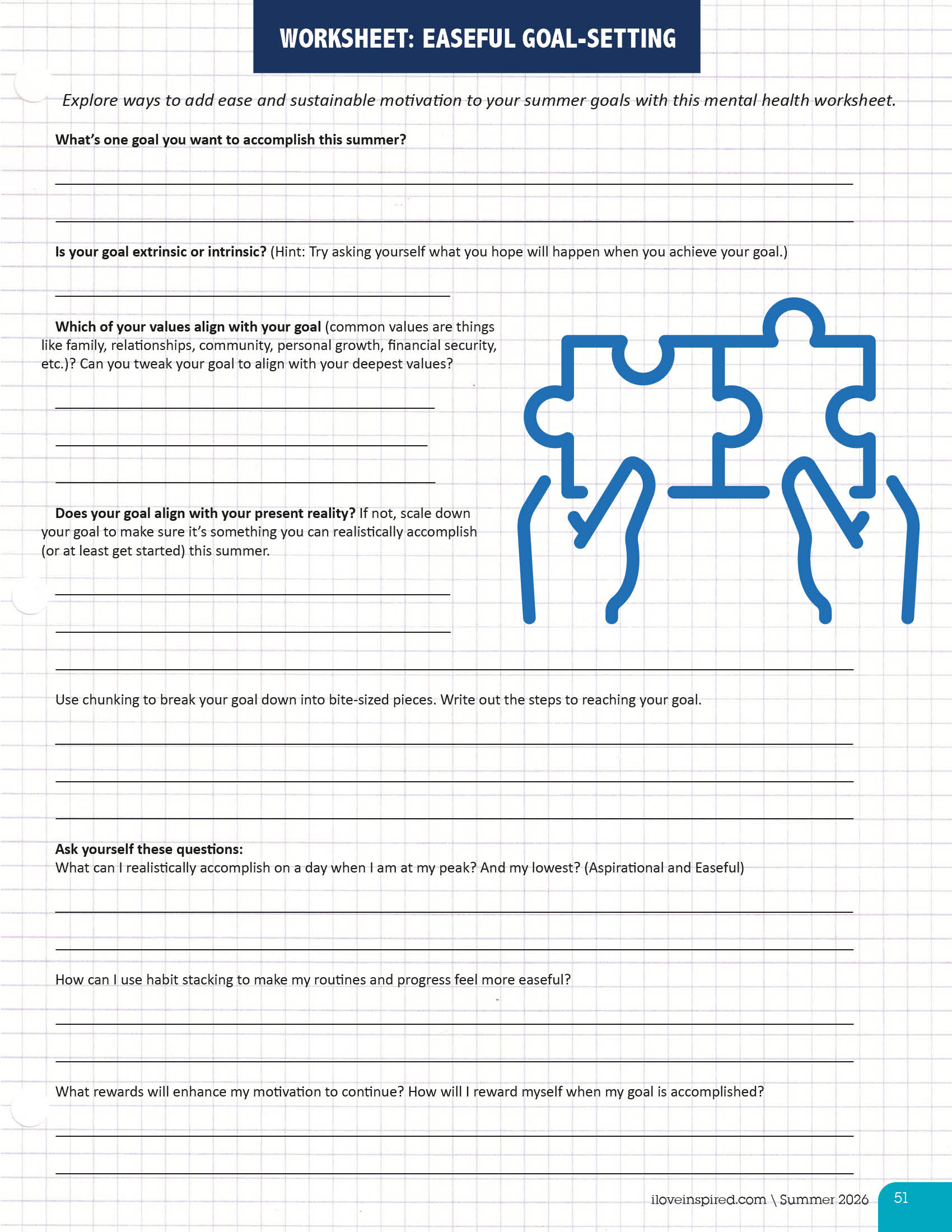
Earlier we touched on setting goals that align with your present reality. It can be hard to know what you’re truly capable of until you get started – and what you’re capable of can vary from day to day. For that reason, it can be helpful to create two sets of goals: aspirational and easeful. 

Aspirational goals reflect what you’re capable of at peak mental and physical condition. These goals appease our overachiever and perfectionist parts. However, we need a failsafe to prevent us from spiraling into guilt or shame when we inevitably fall short.

Easeful goals are the simplest version of our goals. These are goals we can still achieve without exerting much mental or physical effort. You can also think of easeful goals as the bare minimum effort required to sustain progress or momentum – without burning out. 

Assess your energy levels daily and decide which set of goals you want to tackle. Then, remember to celebrate your wins either way. 

Not sure how to create easeful goals? Try bite-sized tasks or habit stacking.

Bite-Sized Tasks 

We can get stuck in task paralysis when we try to tackle everything as a whole. Meaning, we stall out before we even get started. To combat task paralysis, break down long-term projects and time-consuming goals into more easeful, bite-sized pieces. This process is often called “chunking.”

Let’s say you want to write a 70,000-word book in the next year. That number might seem overwhelming at first. So, we can break it down. It’s roughly 5830 words per month, or 190 words per day. You could accomplish your goal by writing 95 words each morning and night. 

Chunking enhances motivation in several ways. First, we naturally build in more rewards. Every step we complete can enhance feelings of accomplishment or relief. Second, motivation builds with each reward – allowing the process to feel easier and more enjoyable. 

Practice Habit Stacking 

We can also build momentum by pairing a string of habits together. You probably already do this unconsciously – for example, a bedtime routine: brush your teeth, wash your face, change your clothes, and get into bed. This is called “habit stacking.

You can, of course, consciously create your own habit stack. Start with a cue that will set off a series of subsequent habits – like a domino effect. The cue should be something that happens daily and without much effort. For example, your morning alarm, the sunset, or a mealtime. 

Next, start to work through behaviors that can easily follow one another. For example, “after I finish dinner, I will put on my walking shoes, and then I will go outside and walk around the block.”

Make sure you are focusing on small, achievable habits that fit naturally into your day. If you come up against blocks, simply consider how you might adjust your habit stack to feel more effortless. With repetition, this can become your automatic routine. 

A Note on Motivation and Mental Health 

No one experiences motivation the exact same way. Neurodivergent individuals (like people with ADHD and autism) may struggle with getting started or transitioning from one task to another. For people with depression, task completion is not always rewarded with a feeling of accomplishment or relief. Anxiety can keep people stuck in rumination, task paralysis, or fear of failure. Many mental health disorders can create blocks to motivation. 

It might be helpful to develop habits and goal setting strategies with the assistance of a mental health professional. Ultimately, motivation is personal and nuanced. Experiment with what works for you. Over time, you’ll find tweaks that work best for your brain. 

Instead of digging deep for motivation, seek ease as much as possible. Enliven your life with rewards and indulge every once in a while. Pleasure does not always have to be earned. 

Motivation will come and go. So, try to enjoy the pursuit of your goals rather than focusing on the outcome. 

Olivia Lynn Schnur


Olivia Lynn Schnur is a Licensed Mental Health Counselor, Licensed Professional Counselor and EMDRIA Certified EMDR Therapist with a Master of Arts degree in Clinical Mental Health Counseling. She is also a Certified Yoga Teacher and Reiki Master. Olivia is passionate about mental health and she writes with the goal of inspiring, educating, and uplifting readers. To learn more, or book a yoga session, visit oliviaschnur.com.

Bonita Underbakke

Bonita Underbakke grew up on her father’s tree farm, and – like the roots of those trees – her life goes deep into the rich soil of Southeast Minnesota. Now on the doorstep of 80, she lives just a few miles away from that girlhood home in Holt Township outside of Lanesboro, leading a quiet and simple life. But she’s far from slowing down.

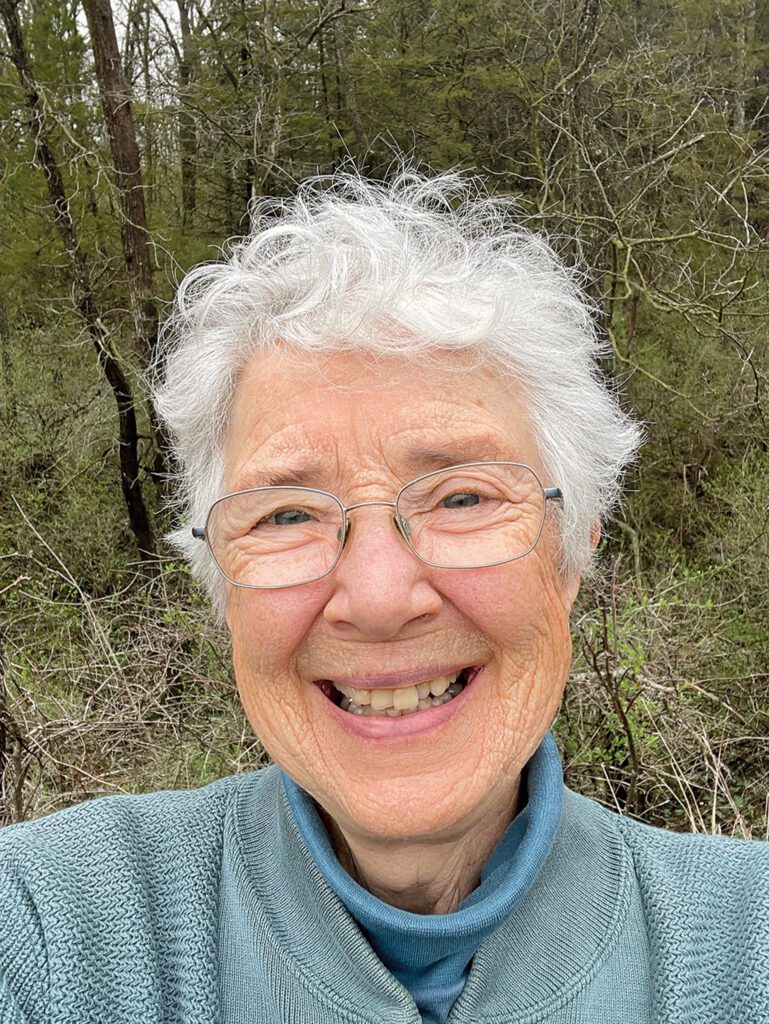
Selfie by Bonita Underbakke

In fact, if you wanted to locate Bonita, she’s pretty easy to find. The best place to look is in the front row of public meetings (especially Fillmore County commission and city council gatherings). She’s the attentive, white-haired lady with notebook and pen in hand. That’s Bonita, carefully listening and always taking notes.

“I’d reached the point in my life when I no longer had to work to make money and found my time freed up,” she says. “While reading local newspapers I learned about decisions being made by our policymakers. I became curious about how those decisions are made. I realized that these are just people, plain neighbors, good, decent people. I started to attend meetings to learn more. Taking notes helps me understand. Sometimes it helps me stay awake! I don’t intend for anyone else to read them, they’re just for me.”

She noticed that not many local citizens attend those meetings; people who do come usually have specific agendas. “It took about a year for the county commissioners to get used to me being there,” she remembers. “They noticed my notetaking and assumed I was there to write a newspaper article. That wasn’t it. I wasn’t there with any agenda or because I wanted to pounce on anything. I was there to learn about the issues, those people, and how they were making important decisions. I show up because I am curious. I seek shared moments that build trust between people. The kind of moments that can help hold the world together.”

Bonita was so faithful in attending regular meetings of the Fillmore County Economic Authority (EDA) that the chair eventually asked if she’d consider volunteering for that board. At first, she was reluctant – “I don’t do spreadsheets,” she says with a smile. Today she serves as that EDA’s chair.

It’s also a priority for Bonita to make connections at local events, classes, and meetings where she’s not taking notes. “Mostly I go to listen to other people,” she says. You’ll regularly find her at craft or art-related classes such as ones held at Lanesboro Arts or at Driftless Fiber Arts in Lanesboro. You’ll also find her at League of Women Voter meetings, at groups supporting local libraries, at F.A.C.T. (Fillmore County Action on Coming Together) activities, and at special meetings addressing proposed projects with potential impact on regional populations.

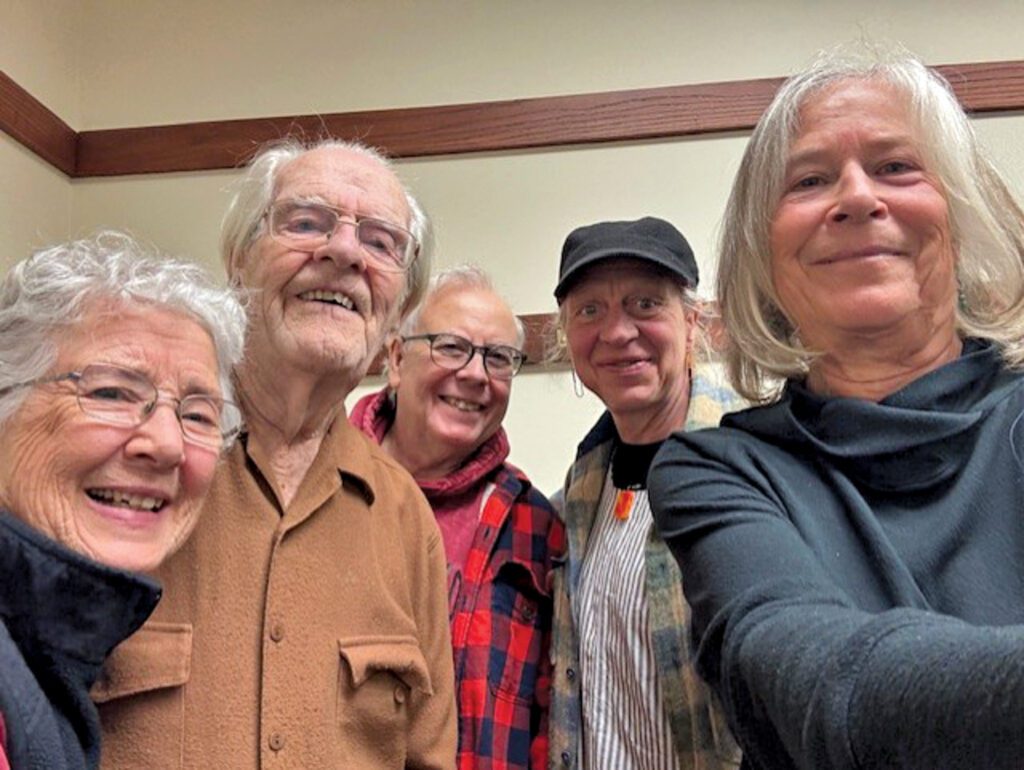
A recent meeting of F.A.C.T. (Fillmore County Action on Coming Together) with (left to right) Bonita Underbakke, Harvey Benson, Dave Hennessey, Eva Barr, and Bonnie Gibson. / Photo by Bonnie Gibson

While her home is close to Lanesboro, Bonita considers herself an active member of a broader community. “My personal neighborhood has a nebulous boundary,” she says. “I’m involved across southeastern Minnesota but also in towns like La Crosse, Decorah, and Rochester. I have opportunities to meet so many wonderful people and learn so much.”

Her support of a nonprofit called “Friends of the Root River” is especially close to her heart. “We provide free, family-friendly events throughout the summer across the whole Driftless watershed,” she says. “I love being a part of that.”

Although Bonita’s sweet and positive spirit seems ever-present, she has occasionally found herself in moments that tested that optimism.

“Long stretches of my life presented major caregiving responsibilities when just getting through the day was all I could do,” she admits. “Years of numbness. Times of just soaking into my surroundings. At one point I realized I had stopped smiling. I made a conscious decision to smile again! I had to practice. It helped when I became more aware of nature all around me, like those moments in early spring when you hear and feel breezes blowing through the trees. I chose to be intentional about enjoying the wonders of nature and I found myself becoming increasingly grateful.”

Working with people in larger group settings has come natural for Bonita over the years. After getting degrees in teaching and Spanish from the University of Minnesota, she taught school and later became Director of Education at Phoenix Residence in St. Paul, a non-profit providing housing and support services to adults with disabilities.

Today more solitary acts of service help fill her day. Like her knitting, for example. “Years ago, I learned about a program dreamed up by some smart women that distributes free, handmade breast prostheses for cancer survivors,” she explains. “They’re called ‘Knitted Knockers.’ Approved patterns are available free of charge to knitters and crocheters world-wide; they’re simple to make and a superb product. I knit away and when I get a grocery bag full, I call up local hospitals and clinics. Off they go to the world!”

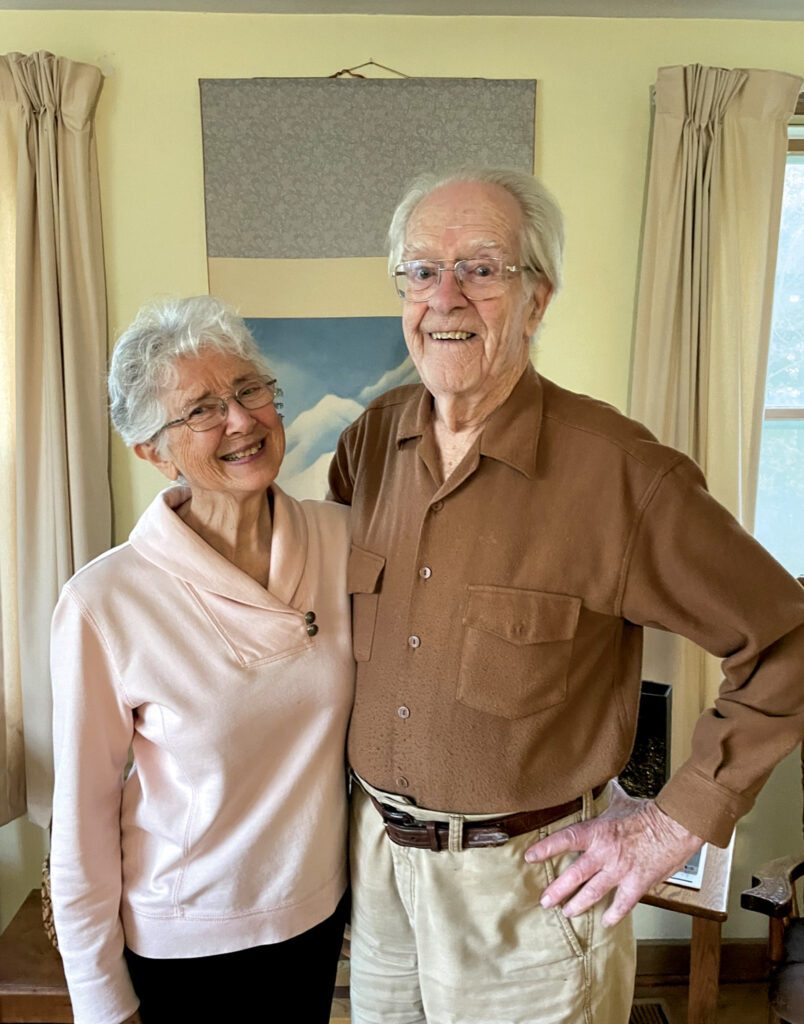
Bonnie Underbakke and Harvey Benson. / Photo by Aaron Bishop

It’s been said that “90 percent of life is just showing up.” That certainly fits community-building, especially in the way that Bonita Underbakke is doing it. She consistently shows up with a curious, caring – and grateful – spirit that may be her biggest contribution of all.

“I’m so grateful for all I have,” she says. “I have time to do all I choose to do. I have all the water I need. I have enough wood to keep my home warm. I have ways to keep in touch with family and friends, especially my dear man-friend, Harvey Benson. Every morning I wake up realizing that I have more choices ahead of me for that day than most people will ever have in their lifetime. Such good fortune is sobering and helps me remain grateful. Every day.”

Steve Harris


Steve Harris, a freelance writer and the author of ‘Lanesboro, Minnesota’ and ‘Dads Like Us’” (steveharrisauthor.com), is working on being curious and grateful like Bonita.

For more information about “Knitted Knockers,” visit knittedknockers.org. To learn about activities and events offered by “Friends of the Root River” go to their Facebook page. The web address for “Fillmore County Action on Coming Together” is fillmoreaction.com.

Decorah Community Meal

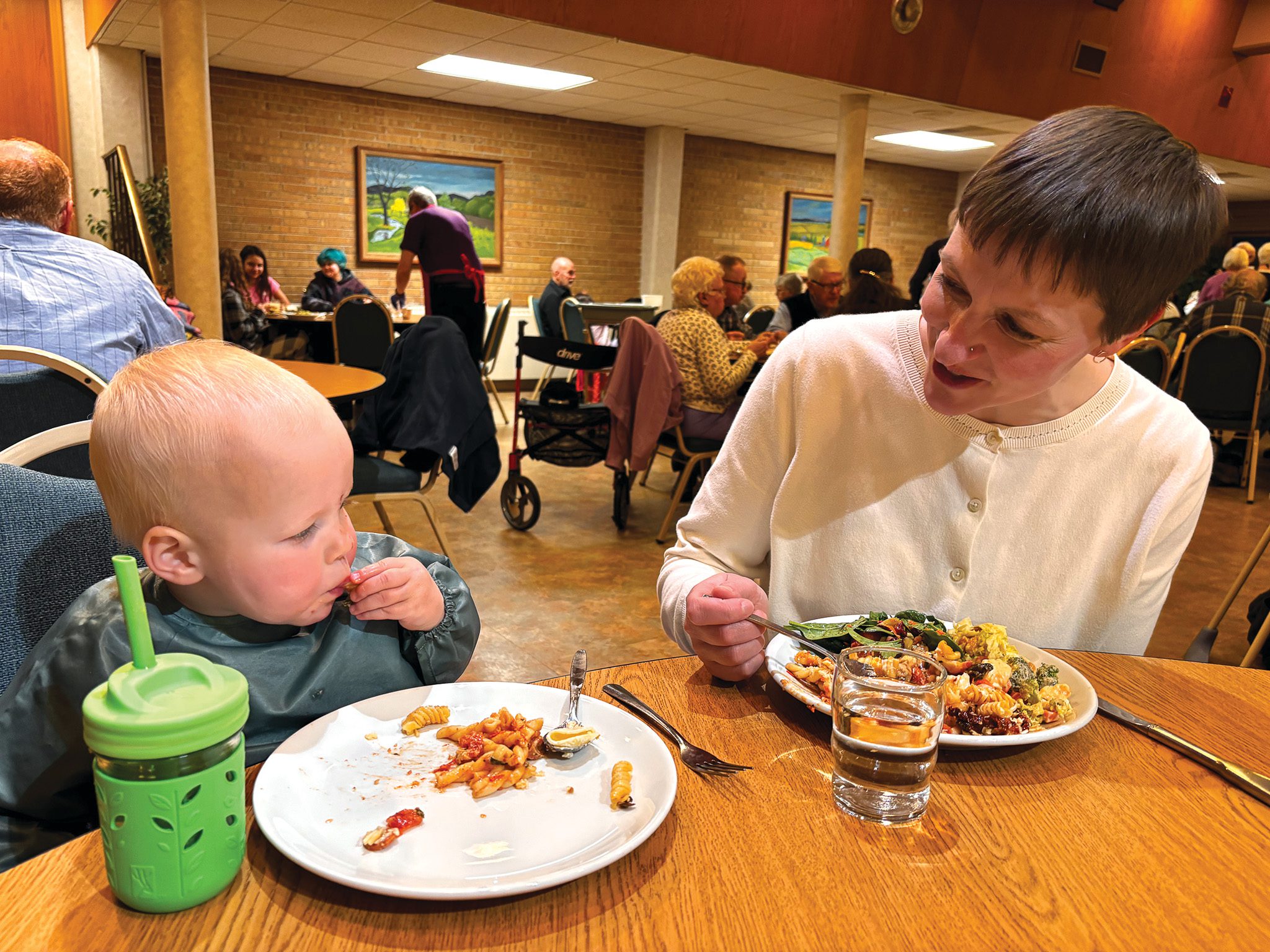
Every first Thursday of the month, the doors of the Decorah Lutheran Church Social Hall open from 5 to 6:15 pm for a free community meal.

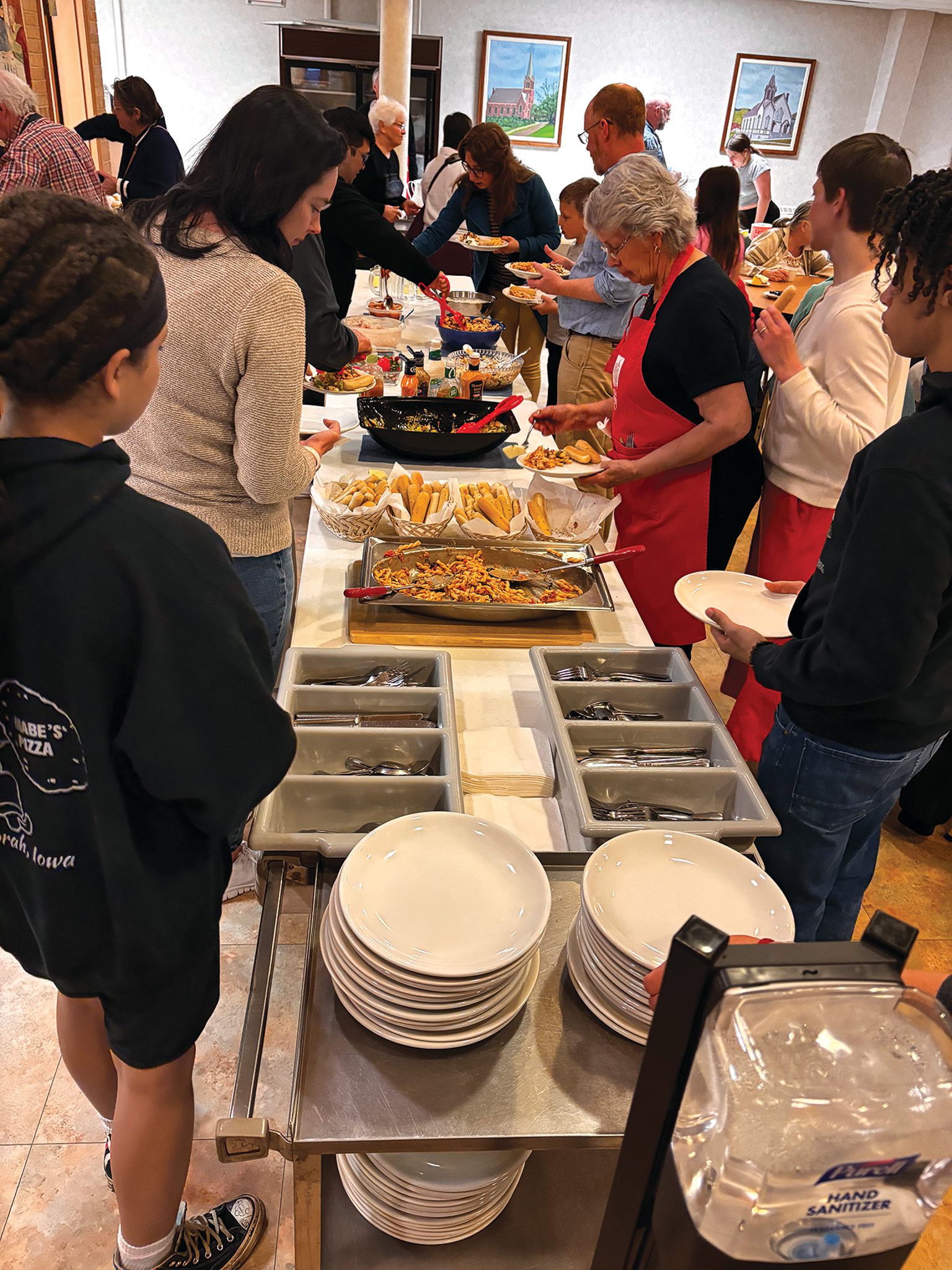
Friends, families, and neighbors fill the hall with conversation and laughter. After a moment of silence to reflect on gratitude, tables are sent to load up their plates. A buffet table offers pans of hot, nutritious main dishes, like fragrant rice and Moroccan chicken stew. Whole wheat bread sticks are next, followed by the many types of salads – greens, fruit, and pasta. Finally, slices of homemade cheesecake and pie line the dessert table, served with freshly brewed decaf coffee and milk. 

Meal-goers lining up for the buffet of food at a Decorah Community Meal. / Photo by Laura Barlament

While this monthly meal is hosted by a church, and it’s coordinated by members of eight churches, there are no religious strings attached – a founding principle of this grassroots effort. The Decorah Community Meal offers an unconditional welcome to all, especially to anyone who feels alone, anyone who longs for more connection.

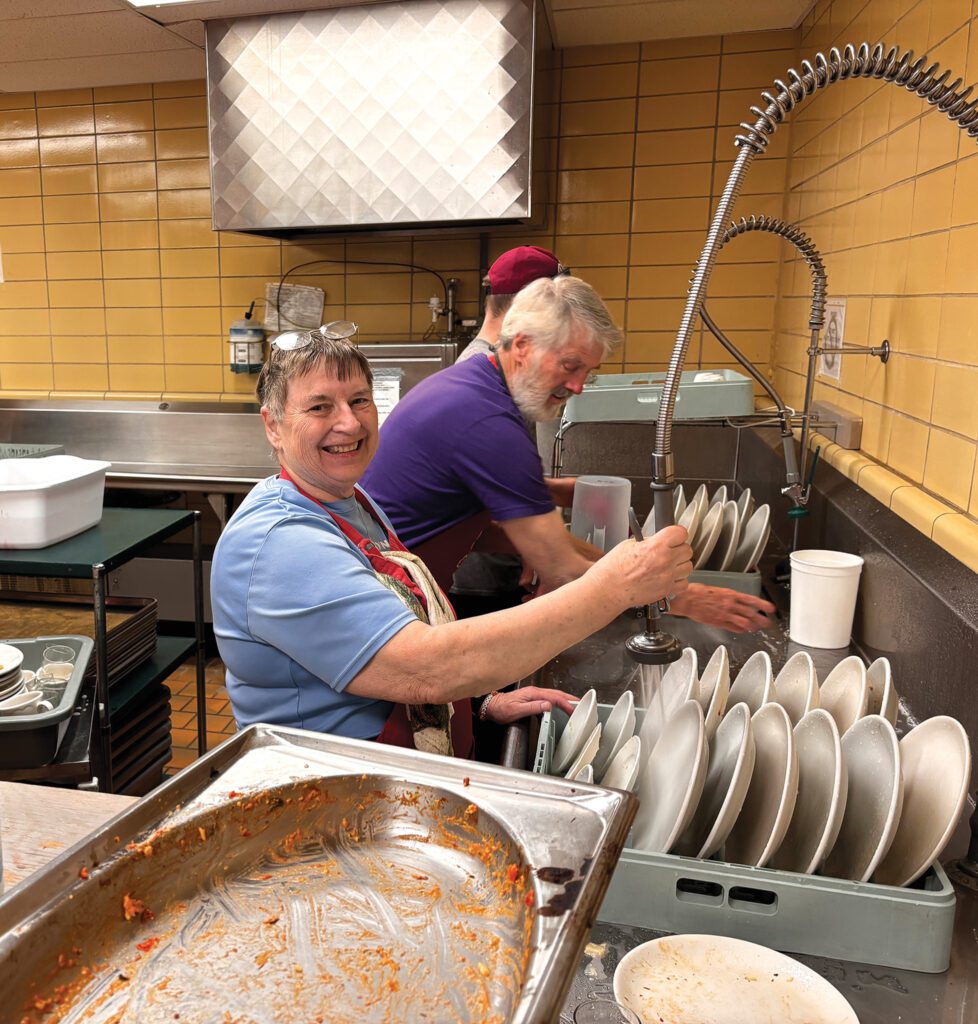
“There are a lot of people who need a free meal, and many other people who just enjoy being with people,” says Gail Judisch, a regular Community Meal dish washer. “It’s a healing experience for people.” 

“Our small group of founding members in Decorah were very set on creating a place and an atmosphere where it would truly be a community gathering spot rather than a soup kitchen with the associated stigma,” says Lor Miller, who chaired the meal’s coordinating committee in its early years.

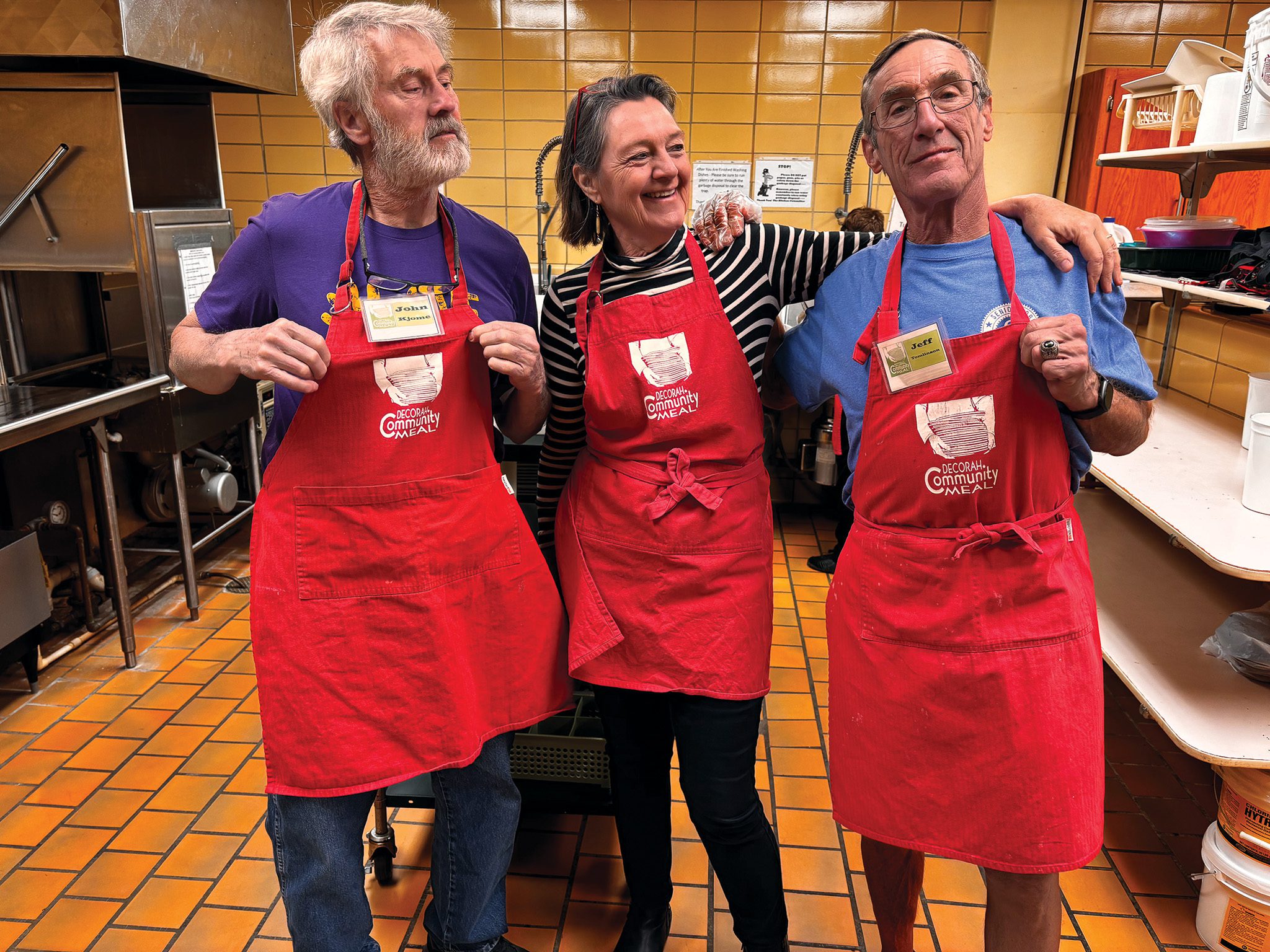
John Kjome, Lor Miller, and Jeff Tomlinson do a silly pose in their Decorah Community Meal aprons. / Photo by Laura Barlament

The Decorah Community Meal started in February 2012, and by now just about the entire town has collaborated on it: restaurants, realties, banks, Luther College teams and choirs, high school and college student organizations, local non-profits, medical businesses and clinics, civic organizations, downtown retailers, the fire department, the police, the sheriff’s office, musical groups – and the list keeps going. It was hosted for years by First Lutheran Church. Then it was hosted by the United Methodist Church as well as St. Benedict’s Catholic before it found a new home at Decorah Lutheran.

Many people have contributed food to this effort over the years, but two food services stand out: the former McCaffrey’s Dolce Vita restaurant and Luther College’s food service provider – formerly Sodexo and currently Bon Appétit Management Company.

“I can remember Otter [Dreaming] and I and a few others discussing whether or not we thought we could manage taking turns preparing the food ourselves when we first started,” Lor says. She was raised in a family of 22 people and thrived making meals for large crowds.

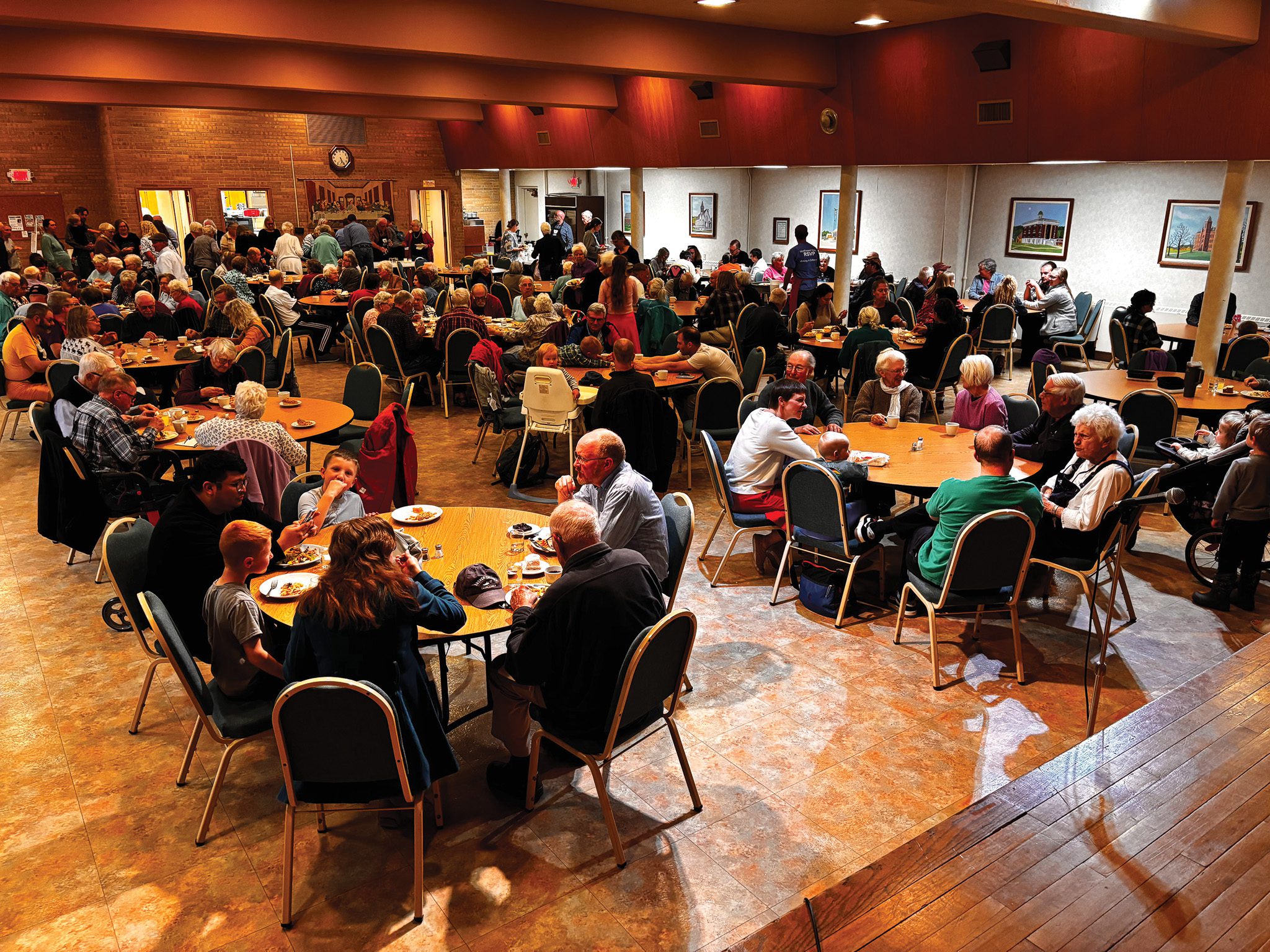
Crowds upwards of 200 regularly attend the monthly Decorah Community Meals, held at Decorah Lutheran Church.  / Photo by Laura Barlament

“Thanks to the amazing generosity of the late Jim McCaffrey, who at the time owned and managed McCaffrey’s Dolce Vita, we didn’t have to cover the main course,” Lor continues. “Apparently Jim had always wanted to do something like this, and he was happy for the opportunity to provide the main for 100 people.”

Sodexo came on board a few months later, when the coordinating committee decided to increase the meal frequency to twice per month. Jim McCaffrey passed away in 2019, and McCaffrey’s Dolce Vita closed in 2020.

In the post-pandemic era, the meal has returned back to a rhythm of once per month. Luther College’s Sodexo picked up its support again, now continued by Luther’s new food services provider, Bon Appétit.

“I learned of the Decorah Community Meal after arriving on campus, and think it’s a great example of how this wonderful community comes together,” said Nic Supercynski, the general manager of Bon Appétit at the college. “Luther’s sponsorship makes the meal possible, and my team and I are thrilled to help bring it to life each month.”

Luther provides the main course and bread, and volunteers or local restaurants provide the 14 salads and 12 desserts needed to feed 200 people. The volunteers also help the coordinating committee (about 15 people) run the meal – bussing and cleaning dishes, wiping tables, keeping the drinks and dessert tables supplied, and helping patrons who are not able to serve themselves at the buffet.

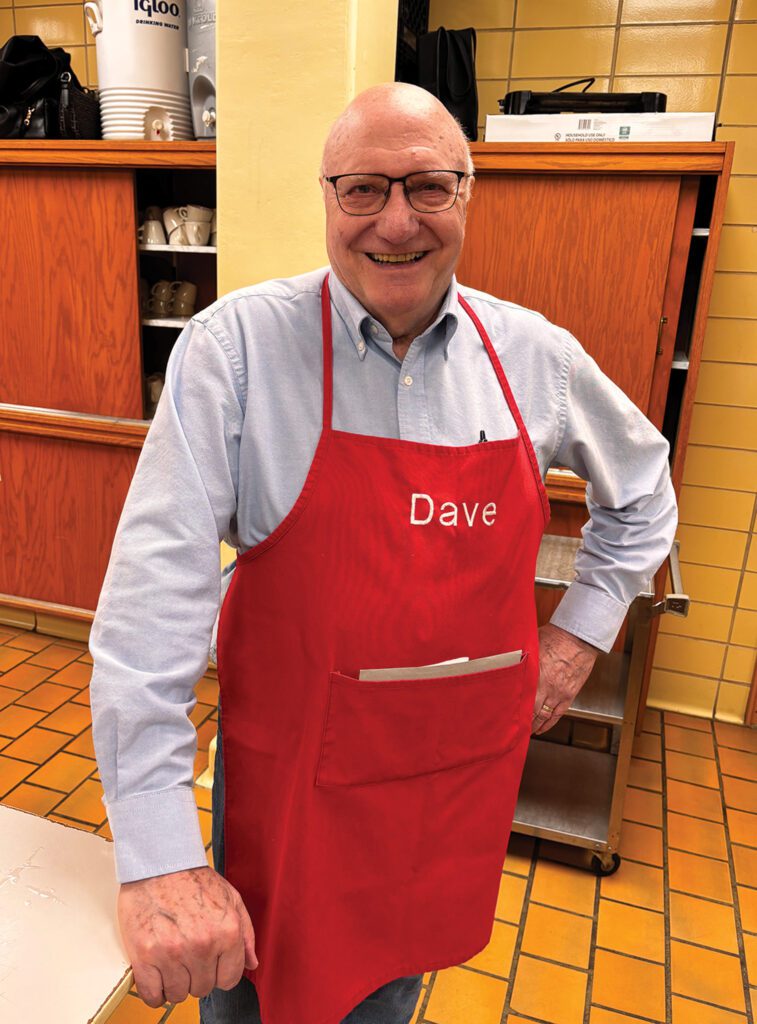
Dave Judisch in his “Dave” apron at a Decorah Community Meal. / Photo by Laura Barlament

Dave Judisch, who has been on the committee from the very beginning, says that finding volunteers to serve the meal isn’t difficult. “We just call them,” he says. “Or, I’m walking down the street, and someone will say, ‘I want to volunteer.’”

In recent months, the meals have fed 150–200 people each time; attendance has gone as high as 238 in the past year. The meal is advertised through flyers hung in Decorah at the Depot Outlet and the Public Library and tucked into the grocery bags of people who pick up food at the Decorah Food Pantry. Immigrants receive WhatsApp notifications about it, and people with disabilities living in group homes are invited. The real delight for them, besides delicious free food, is that they meet everyone there, including people they rarely socialize with.

Many people note how important the meal is to the elderly and people with disabilities. They are often on limited incomes and sometimes can’t afford sufficient food, not to mention eating out. Others might have the finances, but they still long for connection.

“The Community Meal started after my husband died, and I was eating alone all the time,” says Sharon Rossman. “This was a place to go to eat with other people. I come every time I’m free. It is nice when you’re a widow.”

“We also encourage those who are not handicapped or seniors or who don’t need a meal to attend,” says Dave. “Those who are in group homes especially enjoy a chance to interact with people who are outside of their day-to-day lives.” Consequently, the meal draws a large cross section of the community: faculty and farmers, barbers and businesspeople, clerks and clergy.

Benjamin Hiester and his mom Megan Buckingham at a Decorah Community Meal. / Photo by Laura Barlament

This assortment of people has been Lor’s favorite part. “Everyone has talent, warmth, and stories to share, and it broadens the mind to interact and enjoy the company of a group of folks with diverse backgrounds and means. It is in this way that we recognize and appreciate our common humanity and the inherent beauty of every single individual,” she says.

The meal is free, but for anyone who is able to contribute, there is a free will donation box. Over the years, it has taken in much more money than the coordinating committee needs for its expenses of buying milk and coffee and paying for church facilities upkeep. This has opened opportunities to fund other needs in the community. 

Kathi Mitchell and volunteers cleaning up after a Community Meal. / Photo by Laura Barlament

For example, they used some funds to start Food for Families, which pays for the purchase and delivery of tasty, cost-effective food staples (rice, beans, and corn flour) to local immigrant families experiencing food insecurity. Food for Families is largely run by Kathi Mitchell, a teacher who has a strong bent toward feeding others. She has prepared a vegetarian gluten-free side dish for each and every Community Meal since she got involved in July 2012.

“The Decorah community works together better than anywhere else,” Kathi says. 

“The fact that somehow, our community has managed to succeed in creating this opportunity and getting folks to come is such an absolute delight,” Lor says. “It became what we had dreamed of – a place to come in out of the rain, feel upheld by the community, enjoy the company of both familiar and new faces, and enjoy a good meal, whether that was a rare treat for you or an everyday affair. And the best part is, it’s still happening!”

Laura Barlament


Laura Barlament lives in Decorah, Iowa, where she works at Luther College.

Get Involved! 

The Decorah Community Meal seeks volunteers to be a part of the coordinating committee as well as groups who would like to sponsor a meal. Contact Dave Judisch at judiscda@luther.edu or 563-380-7707. And learn more about how to donate to Food for Families at decorahucc.org/neighbors

Secret Link